When planning their English-language website, many businesses expanding into European and North American markets wrestle with a question: “The United States and the United Kingdom are both target markets for us. Do we need separate sets of pages under /en-us/ (US website) and /en-gb/ (UK website), in addition to /en/?”
Splitting them without a clear reason often has disastrous consequences: if 95% of the text, images, and products on the two versions are exactly the same, with only a few words changed from Color to Colour, you not only double the content team's routine maintenance workload but also make the two directories compete for rankings for the same English keywords in Google Search (keyword cannibalization).

1. When is there “no need to split,” and a single global English website (/en/) enough?
If your business provides B2B custom manufacturing, outsourced software development, general industrial products, or technical services delivered consistently worldwide, and meets the following criteria, we strongly recommend maintaining just one high-quality general English website:

- The product models and technical standards for products sold in the United States and the United Kingdom are exactly the same;
- The website does not display tax-inclusive retail prices directly; instead, all customers submit an inquiry (RFQ) to obtain a custom quotation;
- There is no separate local warehousing, dedicated after-sales phone number, or distinct local regulatory certification requirement in the United Kingdom or the United States.
2. When is it “necessary to split” or configure regional subdirectories?

Only when the US and UK operations have the following substantive differences is it necessary to create /en-us/ and /en-gb/ and configure the corresponding hreflang tags:
- Completely different payment currencies, shipping, and taxes: for DTC ecommerce or standard-product websites, the US website lists prices in
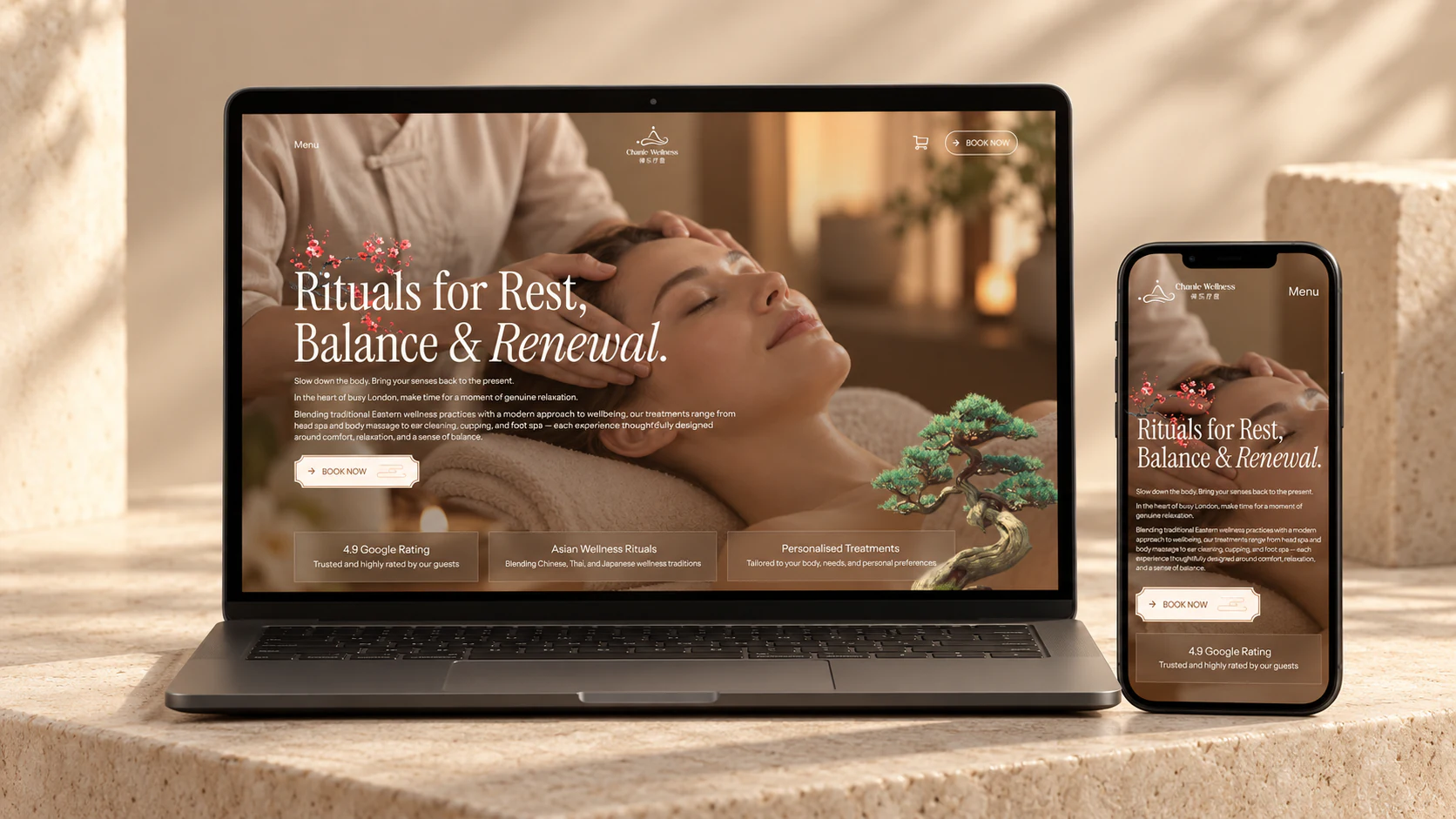
USD ($), offers free shipping on orders of $50 or more, and calculates state sales tax at checkout. The UK website (such as the Chanle Wellness UK website we worked on) must instead list prices in pounds sterlingGBP (£)inclusive of value-added tax (VAT) and display local delivery times for Royal Mail / DPD. - Different electrical standards and industry regulatory certifications: for example, charging equipment, medical devices, or financial products require UL / FCC / FDA certification and 110V US-standard plugs to be shown for the US market, while the UK market requires UKCA / CE certification and 230V UK-standard three-pin plugs.
- Separate local subsidiaries, showrooms, or service teams: each market has its own local office address, local customer service phone number, and local customer case studies. Separate versions can significantly improve local customers' trust and local search (Local SEO) rankings.