Key Takeaway (TL;DR)
The “hunter–nurturer hypothesis” in evolutionary psychology, described as the Hunter-Gatherer Hypothesis, is often crudely reduced to a dogmatic constraint on children's product design: boys' toys must be blue, mechanical, and weapon-oriented; girls' toys must be pink, dolls, and pretend housekeeping. Yet extensive modern neuroscience and primate behavioral research demonstrate that children's behavioral preferences are not determined by biological sex alone. They arise from dynamic combinations of more fundamental cognitive play models: spatial trajectory tracking, mechanical control, and rule-based competition, alongside emotional facial interpretation, empathetic caregiving roles, and fine color perception. JVDS advocates dismantling clichéd gender oppositions in children's digital products, educational apps, and gamified UI/UX design, giving every child unlimited scope to explore through a multidimensional mental playground.
1. Biological Instinct and Social Learning: A Century of Debate over Toy Preferences
Walk through a traditional large toy store and you will encounter a glaring dividing line. On the left is an entirely pink “girls' section,” filled with hairstyling, dressing-up, and baby-care dolls. On the right is an entirely dark-blue “boys' section,” filled with guns, tanks, and fighting dinosaurs.
Is this commercial segregation an inevitable reflection of human biology, or a self-fulfilling prophecy of product packaging?
1.1 The Dialectic Between Primate Evidence and Modern Scientific Revision
- The Classic Primate Experiment (Alexander & Wilcox, 2002): Researchers offered human toys to vervet monkeys, finding that males spent more time with balls and toy vehicles, while females remained in contact with soft dolls longer. Biological determinists have often treated this result as authoritative.
- A Reversal in a Modern Controlled Experiment in 2023: A free-choice toy test involving 14 adult rhesus macaques, conducted under more tightly isolated, single-variable conditions, did not reproduce the absolute gendered category preferences of earlier group experiments. This provides a profound demonstration that apparent preference differences depend heavily on specific social contexts, group imitation, and the physical characteristics of stimuli—such as movement speed, sound and rebound, and tactile qualities—rather than simple genetic programming.
1.2 Lorenz and the Essence of the Adaptive Hypothesis: Play as Survival Rehearsal
From the perspective of evolutionary adaptation, childhood play is essentially a risk-free sandbox in which humans rehearse the complex survival skills required in adulthood:
- Exploration and Tracking (Hunting/Navigational Schema): Attention centers on the movement of three-dimensional spatial coordinates, prediction of angular velocity, use of mechanical levers and tools, and bounded contests with rules for winning and losing.
- Empathy and Caregiving (Nurturing/Relational Schema): Attention centers on recognizing micro-expressions, resonating with speech and tone, caring for vulnerable living beings, and maintaining complex social relationships.
A psychologically well-rounded human being needs both the drive to explore the world and the warmth to care for others. If design confines children too early, it deprives them of their full potential for cognitive growth.
2. Rethinking a Classic Product: Pleo's Technological Spectacle and Experiential Disconnect
Developed by Ugobe in 2006 at a cost in the tens of millions and hailed as a groundbreaking biomimetic robot, the Pleo electronic pet dinosaur left interaction designers with a painful case study:
2.1 A Hybrid Form Full of Contradictions
- A Technological Marvel: Dozens of miniature motors, capacitive touch sensors, and sound-localization microphones throughout its body allowed it to simulate the full biological rhythms of a newly hatched Camarasaurus.
- The Critical Problem of Misaligned Expectations:
- If positioned as a “hunter companion” that stimulated boys' desire to track and control, its extremely slow crawling and sluggish movements could not satisfy the excitement of high-speed pursuit or competitive confrontation.
- If positioned as a “baby to care for” that stimulated nurturing, its cold, stiff green rubber reptilian exterior concealed a hard metal mechanical skeleton. When children held it, it lacked the warm, soft tactile comfort naturally associated with furry mammals.
Pleo suffered a disastrous disconnect between its technical capabilities and children's genuine underlying play expectations. The lesson is that excellent hardware or software must align its form and interactive feedback closely and clearly with the core psychological experience it promises.
3. A Comparison Matrix of Mechanisms for Children's Digital Experiences
Modern educational software, early-learning apps, and interactive hardware for children need a mechanism matrix that combines inclusivity with sustained play value:
| Gamification Level | Core Psychological Drivers and Implementations | Value for Cognitive Development | Typical Failures and Pitfalls |
|---|---|---|---|
| High-Frequency Core Open Exploration Creative Sandbox | • Open-ended block building and spatial mechanical assembly, with Minecraft-like freedom • Lifelike digital companions with rich expressive feedback • Gradually advancing small puzzle-solving levels with clear feedback | Extremely high. Develops spatial-geometric reasoning, emotional empathy, and systematic, proactive problem-solving. | Crude gender-routing pop-ups: “Are you a brave little hero (boy), or a beautiful little princess (girl)?” |
| Low-Frequency Necessary Competitive Rules Developing Rule Awareness | • Timed strategic competitions with explicit scoring and protective mechanisms • Cooperative resource allocation and relay-style division of work • Safe challenges with no punishment for failure and an immediate one-click restart | Builds resilience, awareness of agreed rules, and interpersonal teamwork. | Introducing adult-style deliberate frustration and payment inducements that cause intense anxiety for young children. |
| Redundant Stereotypical Confinement Crude Commercial Tactics | • Empty games exclusively for girls consisting only of dressing up, makeup, or lipstick selection • Low-intelligence shooters exclusively for boys, with no logic beyond violent explosions and flashing screens • Money-extraction traps filled with shrill alarms and frequent full-screen top-up prompts | Seriously toxic. Severely narrows children's interests and imagination, inducing substantial sensory overload and psychological distortion. | Development teams copying adult gambling tactics for convenience and fobbing children off with highly saturated primary colors and poor-quality animation. |

4. JVDS's Engineering Method for Children's Digital Interaction
For future-facing holistic education platforms, interactive smart hardware, and family collaboration software, JVDS proposes an inclusive UI/UX architecture: break color-based prejudice and return to the essence of play.
[JVDS Inclusive Interaction Model for Children]
Gender-neutral natural colors → Open-ended compound tasks → Immediate multimodal sensory feedback → Observation of spontaneous behavior
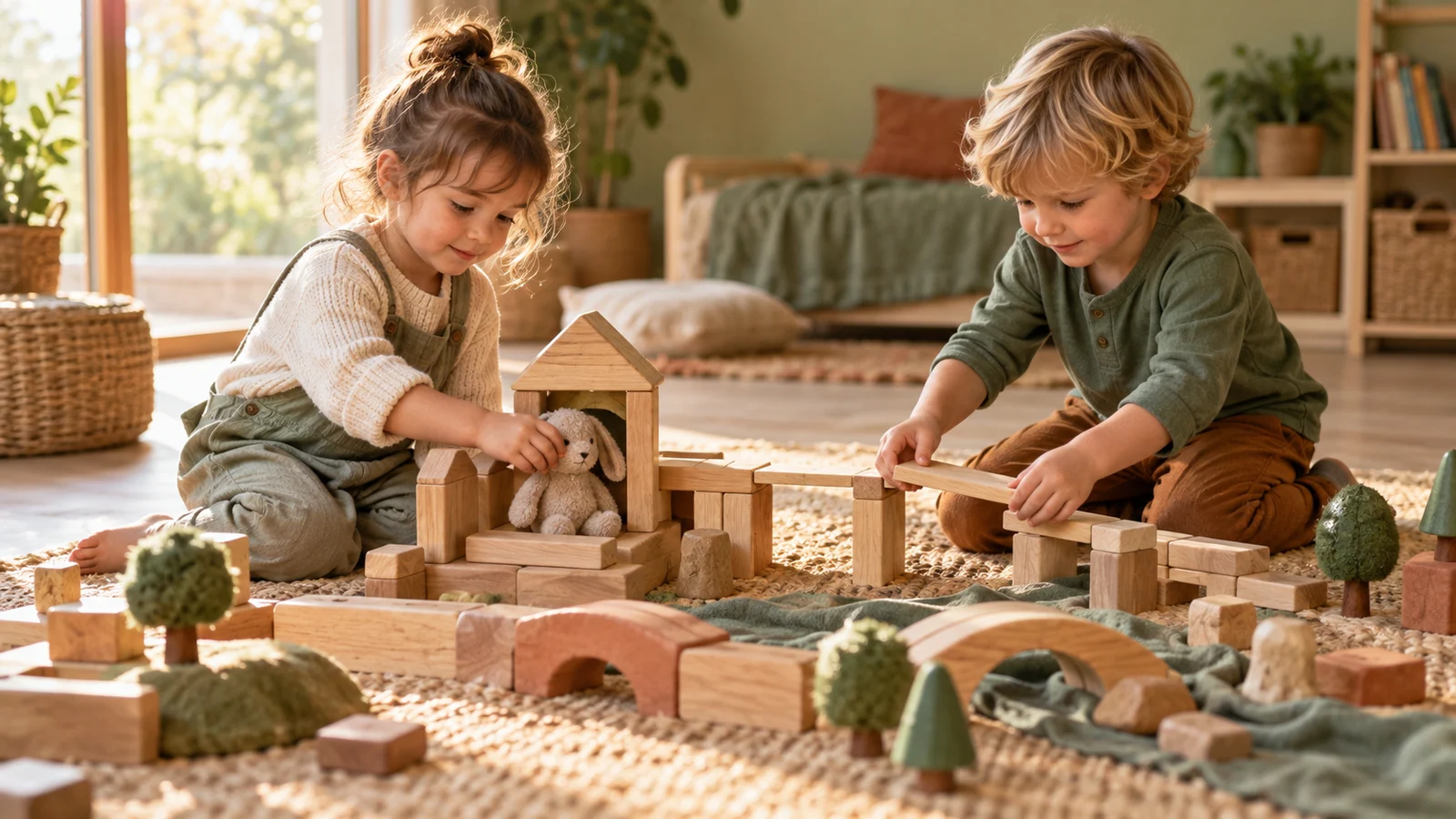
- A Stereotype-Free Biophilic Chromatic Scale: JVDS rejects the simplistic “blue for boys, pink for girls” binary throughout children's product systems. We draw on lively berry orange, deep forest green, warm sunlight yellow, and misty morning cyan. High-lightness, soft, low-stimulation color combinations create a visual haven in which every child can feel fully accepted.
- A Dual-Helix Core Loop of Exploration and Care: JVDS promotes integrated task chains in the architecture of core gameplay. In a level where children drive a high-tech mining vehicle across an unknown planet, they must use physical lever principles to bridge gaps and open routes, satisfying spatial tracking and mechanical control. They must also help and care for injured small alien creatures along the way and build shelters for them, satisfying empathy and nurturing. Technological capability and human tenderness intertwine within the same product.
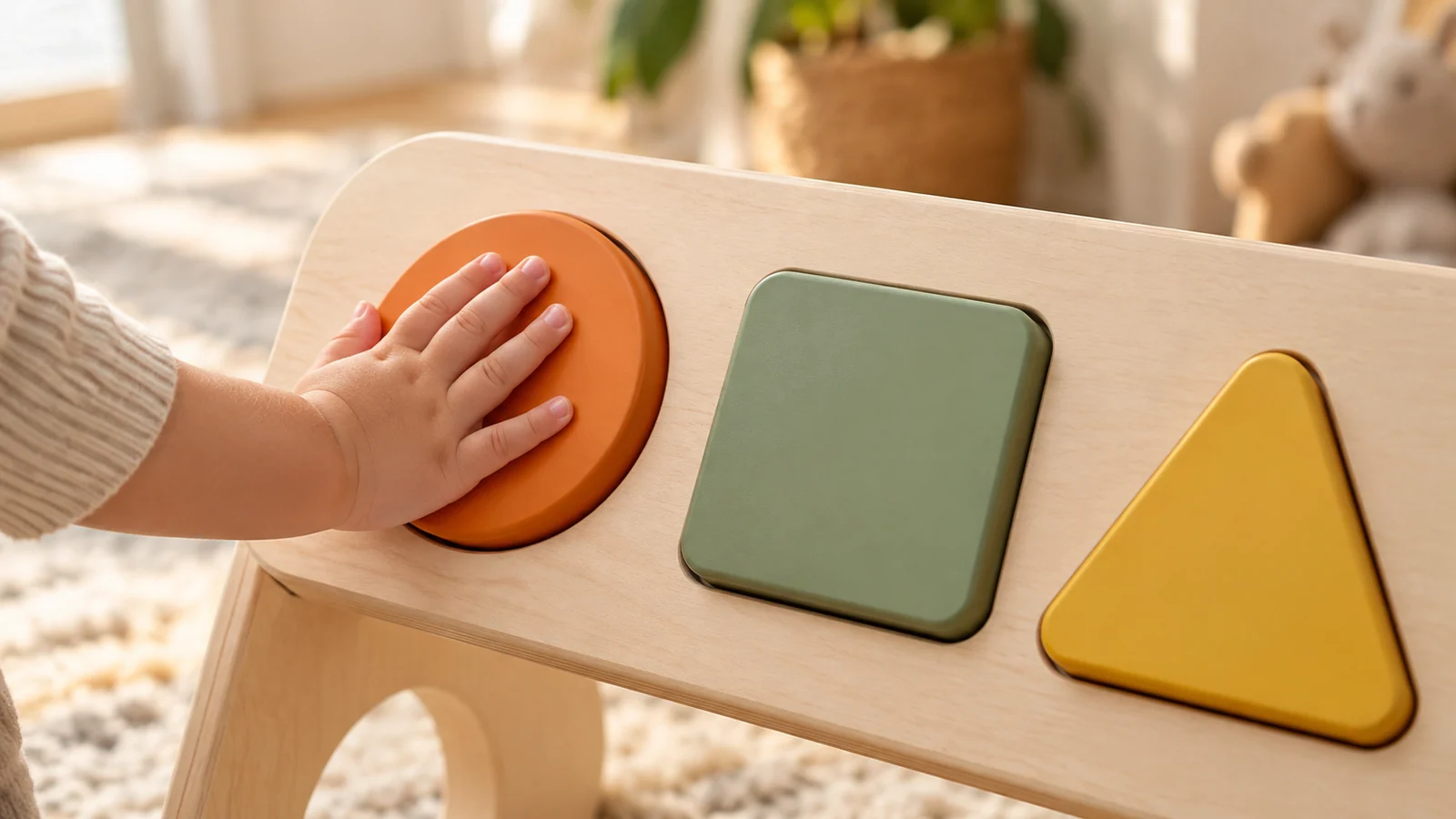
- Zero-Literacy Intuitive Signifiers: To suit young children's cognitive development, interfaces eliminate lengthy written instructions. Physically plausible gravity and elastic rebound, clear and expressive character sound effects, and fluid particle trails accompanying gestures let children intuitively understand complex mechanisms within ten seconds through touch and audiovisual feedback, even if they cannot read a single word.
5. Frequently Asked Questions
Q1: What could happen if a children's app entering European and North American markets still uses separate boys' and girls' sections?
It may face not only collapsing user sentiment but also regulatory scrutiny in multiple countries. Mainstream European and North American app stores, such as Apple's App Store and Google Play, and global compliance frameworks such as COPPA, the Children's Online Privacy Protection Act, impose extremely strict review standards concerning bias and children's privacy. Software that openly segregates genders and promotes stereotypes can easily face parent-group boycotts, reduced visibility, and removal from app stores. A universally inclusive experience without gender labels has become an absolute baseline for global products.
Q2: How can interaction design prevent errors when young children repeatedly swipe and tap indiscriminately?
Deploy palm rejection and drag debouncing. Children's fine motor control is not fully developed: they may press an entire palm against a screen or slide and drag substantially while tapping. JVDS specifications require touch response areas of at least 64 × 64 pt, code that filters unintended palm-friction contacts shorter than 0.2 seconds, and advanced gestures for all important destructive actions, such as holding for three seconds while drawing a circle or pressing with two fingers simultaneously. These measures create a robust engineering defense against accidental input.
Q3: How can we tell whether children genuinely like a new feature, rather than parents merely imagining that they do?
Use unprompted free-play observation. Never simply ask a child, “Do you like this new toy?” Children often nod to please adults. Place a device running the new prototype in a real kindergarten or activity room without providing instructions. Observe whether children can start using it independently without adult intervention. When they fail, do they laugh and try again, or abandon the device? After playing for 15 minutes, do they actively look for it again the following day? Honest return visits expressed through spontaneous body language are the only true measure of a children's product's soul. Explore the JVDS team's design portfolio for examples of all-age digital interaction combining human warmth and advanced ergonomics.