Key Takeaway (TL;DR)
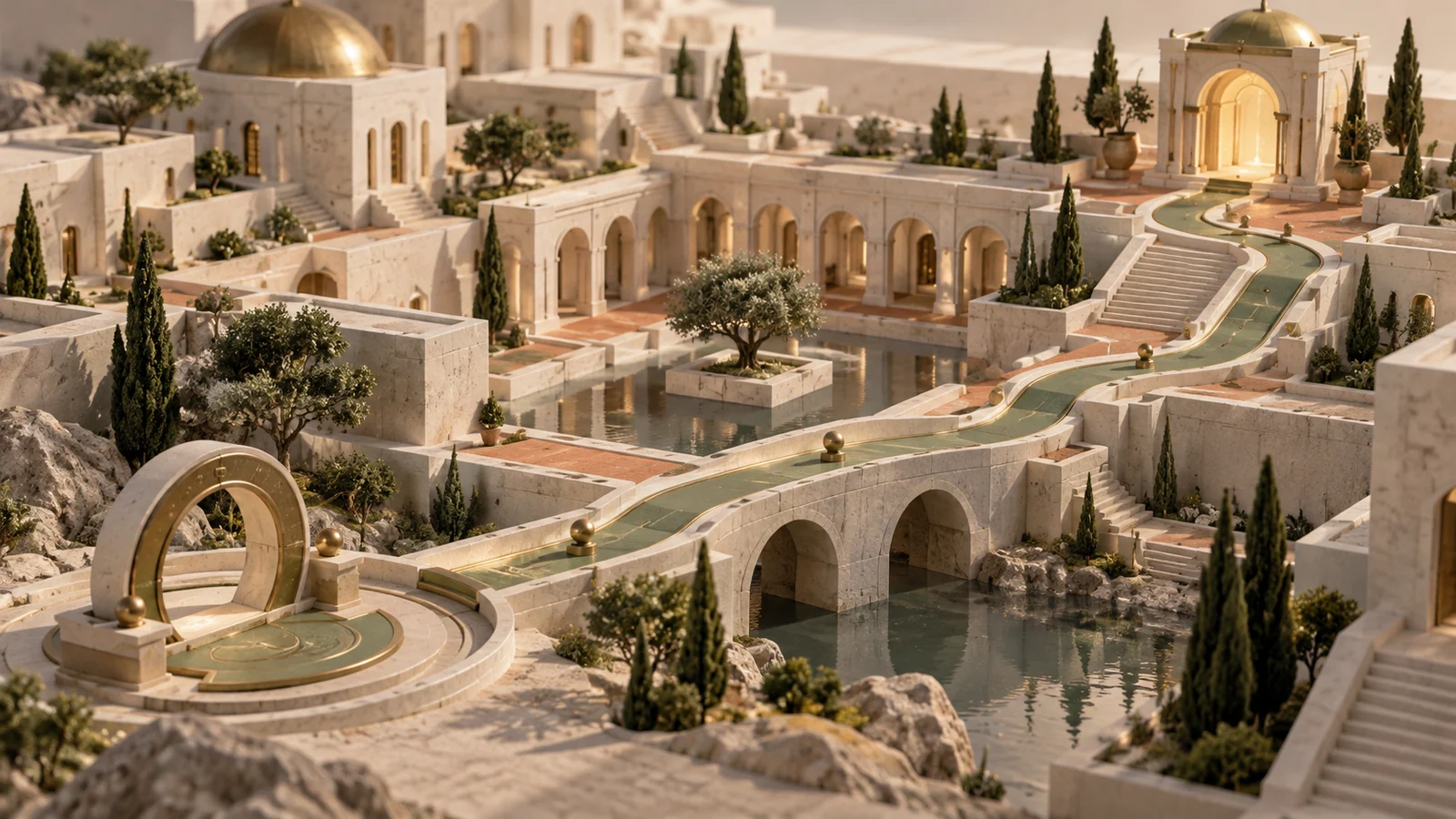
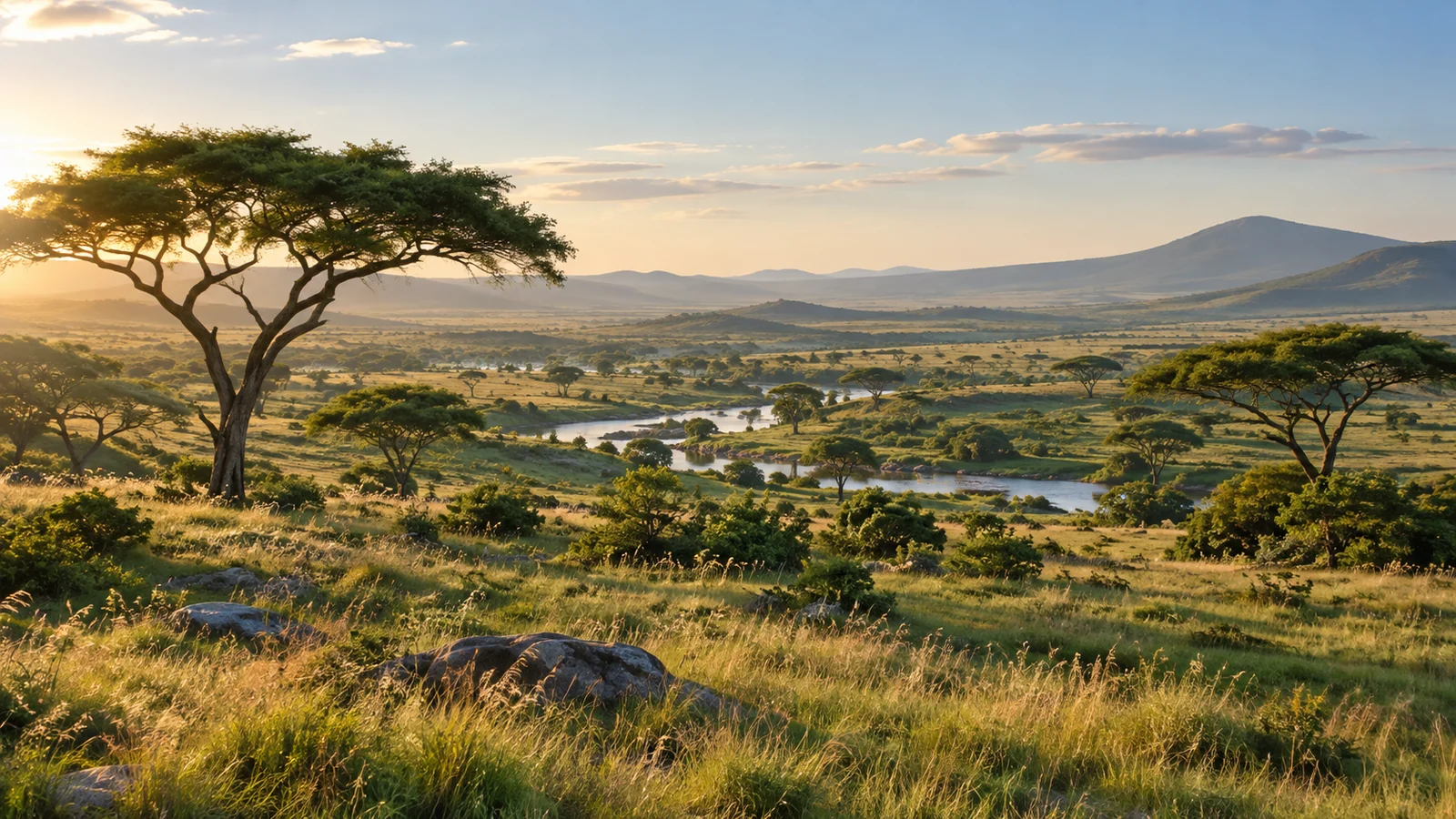
The Savanna Hypothesis describes a primitive affinity for certain environments in human evolutionary psychology. Our ancestors' long history on the open savannas of East Africa is said to have embedded an instinctive attraction to gently rolling grassland, scattered shade trees, distant visible water, and expansive views with considerable depth. JVDS emphasizes that understanding this hypothesis in digital-brand imagery and three-dimensional environments does not mean mindlessly adding grass photographs to every page. It means drawing on its spatial principles—open sightlines, clear layers of light and shade, unobstructed circulation, and reassuring places of refuge—to create a commercially credible environment in which people feel at ease.
1. A Green Oasis Deep in Our Genes: Evolutionary Evidence for the Savanna Hypothesis
Human preferences for natural environments are not simply created by education. They are instinctive filters shaped by millions of years of natural selection:
Four Psychological Elements of Savanna Landscapes and Their Spatial Mappings
- Element one: Open views—excellent depth for surveying the surroundings: Gently rolling terrain provides unobstructed sightlines across tens of kilometers, reducing claustrophobia. In a page, this translates into an expansive horizon in the hero section.
- Element two: Scattered trees—reassurance through places to climb and escape: Dispersed trees provide potential refuge. Their web-layout equivalent is a set of well-spaced, independent function cards with ample surrounding negative space.
- Element three: Abundant resources—green grass, water, and vitality: Clear water and lush vegetation awaken a deep sense of abundance. In imagery, this becomes warm, luminous natural light and visual metaphors for life.
- Element four: Clear routes—removing potential ambushes and barriers: Without tangled undergrowth, movement encounters no resistance. This translates into smooth interaction flows without interruptive pop-ups.
- Environmental-psychology evidence across cultures and ages: Cross-national and cross-age tests by renowned psychologist Gordon Orians and others revealed a striking pattern. When young primary-school children relatively untouched by modern cultural influences were shown tropical rainforest, deciduous woodland, coniferous forest, arid desert, and African savanna, the vast majority displayed an overwhelming instinctive preference for open savanna woodland. As people age, adults develop cultural attachments to familiar local forests, such as northern Europeans' affinity for conifers. Yet under fatigue and stress, gently open grassland remains a shared restorative oasis for humanity.
- Why golf courses and city parks resemble savannas: Luxury resorts, mansion lawns, and modern urban parks across five continents share remarkably similar features, whether in Scotland, Tokyo, or New York: neatly trimmed green turf, scattered umbrella-shaped trees, and winding artificial lakes. In spending trillions to build ideal leisure destinations, humanity is effectively recreating East Africa's ancestral survival landscape.
- Less claustrophobia and greater environmental control: Compared with dense primeval forests that hide predators and venomous snakes, or barren deserts without water or vegetation, open savanna woodland offered early humans an ideal sense of perceptual control. Long views revealed prey and enemies kilometers away, while nearby trees provided climbable refuges. This environment directly triggered subconscious reward circuits associated with safety, abundance, and vitality.
2. Counter-Instinctive Mistakes in Commercial Imagery and 3D Scenes
In corporate key visuals, metaverse environments, and digital exhibition spaces, many design teams violate environmental-psychology principles and create oppressive, uncomfortable settings:
2.1 Suffocating, Dense-Forest Layouts
Some brands try to convey environmental responsibility by filling the hero background with dark, tangled close-ups of dense old-growth forest, sometimes even placing black text over them. On arrival, viewers perceive obstructed vision, gloom, and potential threat. The nervous system responds with a stress-driven desire to escape, turning a page intended to promote sustainability into a nightmare that repels customers.
2.2 Lifeless Virtual Wastelands
In many 3D showrooms and metaverse launch venues, teams eager to display cyberpunk style create endless cold concrete, floating dark-red rocks, and fully enclosed steel domes. Within two minutes of moving an avatar through the space, users may experience intense cognitive suffocation and digital dizziness because natural signs of life and calming, expansive views are absent.
3. A Four-Dimensional Savanna Matrix for Visual-Space Engineering
To help teams bring nature's restorative qualities and commercial trust into visual storytelling and digital spaces, we use the following four-dimensional screening matrix:
| Evaluation dimension | Frequently used core functions/assets | Infrequent but necessary functions/assets | Redundant distractions, false functionality, or empty formalities |
|---|---|---|---|
| Openness of hero-section sightlines | Maintain broad, clear horizontal depth: a stable horizon, open foreground, and expansive distance | Use trees or buildings as side framing without obstructing the principal route | Block the center with a massive, dark, lifeless object and leave no visual escape |
| Signals of vitality and resources | Include appropriate clear-water reflections, a warm sense of gentle breeze and abundance, and lively natural light | Abstract the oasis into an airy, luminous gradient behind a technology interface | Fill the scene with withered yellow leaves, cracked earth, or lifeless black voids |
| Children's and educational-product visuals | Use gently rolling green slopes, clear mild skies, and rounded scattered trees | Give characters babyface features such as large eyes and rounded chins, as in the classic Teletubbies setting | Use dark, oppressive Gothic mazes with sharp forms as the basic interaction environment for preschool children |
| Authenticity and content fit | Make the visual setting serve the brand's real geography and the product's physical reality; never fabricate a mismatch | For intangible products such as software, translate the savanna philosophy into an open, spacious interface layout | Place deep-sea diving equipment or mining machinery on green lawns merely to imitate savanna preference |
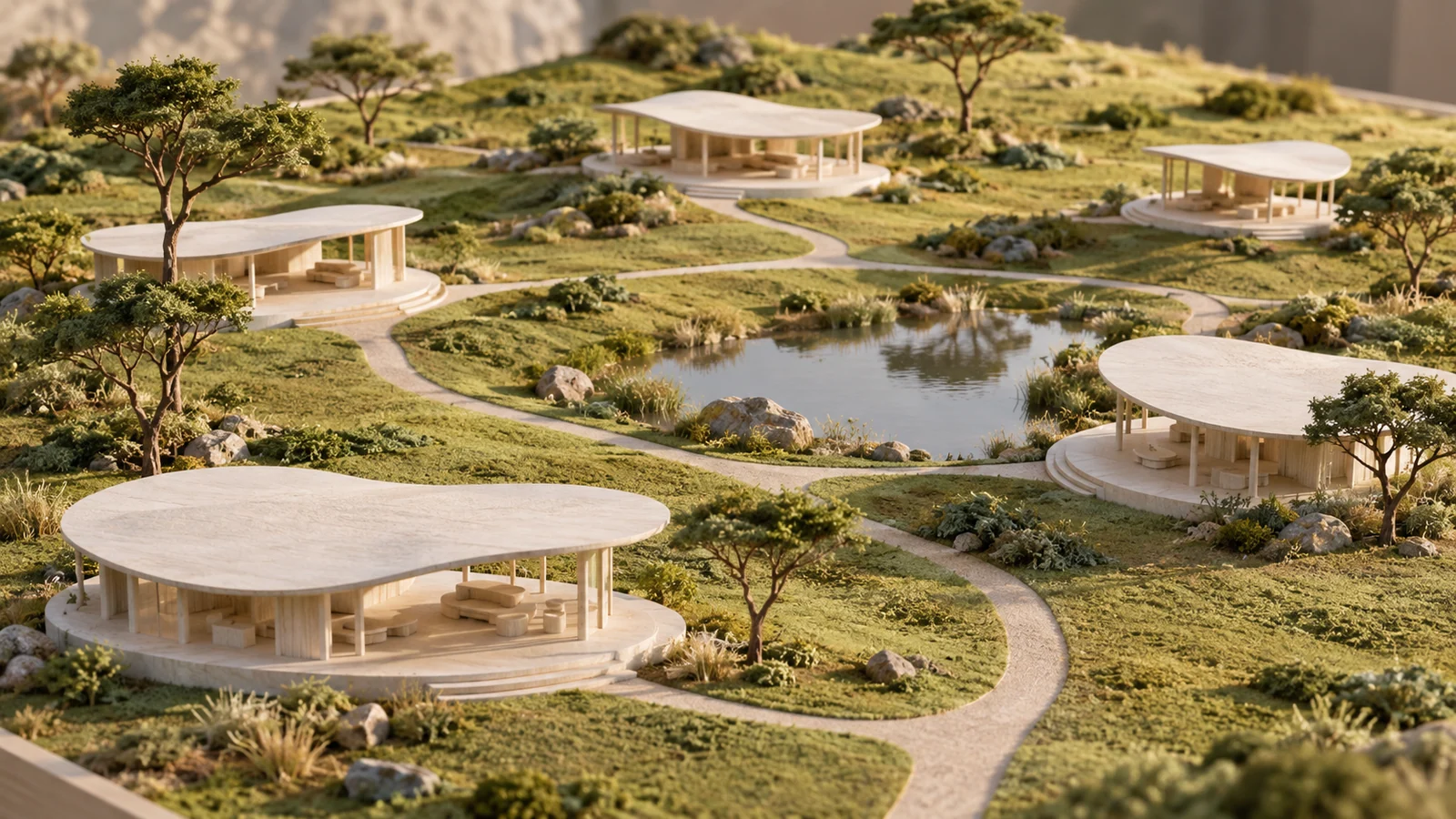
4. JVDS's Engineering Practice of Open, Lively Spaces
In the portals for large modern agricultural groups, digital systems for green-energy brands, and custom corporate website designs created by JVDS, we turn savanna preference into a broader philosophy of spatial aesthetics:
- The Open Horizon rule for visual clarity: In our flagship website hero images, we exercise strict ergonomic control over the scene's depth ratio. The principal space remains open and gently graded, letting the gaze pass unobstructed to the distant horizon. Broad areas of warm, clear natural light immediately ease the viewer's tension. In the first second after opening the website, customers sense the company's openness and abundant vitality.
- Scattered Clusters in information-card architecture: We translate the savanna's ecological spatial principles into web layouts. Content cards are never densely pressed together. Instead, like elegant umbrella trees on open grassland, they are distributed rhythmically with generous, level breathing space around them. While exploring complex products, users can grasp the overall landscape at a glance and pause safely within any individual card. Visit our design portfolio to experience the relationship between natural aesthetics and contemporary digital interaction.
- Photography direction grounded in real environments: JVDS rejects cheap online landscape wallpaper. If a client's products belong in Gobi wind farms or deep-sea drilling, we never fabricate grassland to flatter the audience. We go into the field and capture another dimension of nature's grandeur in the windswept desert. Real wilderness and monumental engineering achievements communicate the industrial dignity of major equipment.

5. Frequently Asked Questions (FAQ)
Q1: Why does the globally popular preschool program Teletubbies use rolling green grassland as its central setting?
It is an exceptional combination of savanna preference and the babyface effect in child psychology. Experiments indicate that complex, changing indoor environments can create spatial anxiety in young children. Teletubbyland instead offers smooth, gentle grassy slopes, blooming flowers, and bright skies, with no sharp obstacles or blocked views. This intensely distilled savanna environment creates an entirely safe, unpressured emotional refuge, immediately immersing hundreds of millions of children worldwide.
Q2: Does savanna preference apply to steelmaking, heavy machine tools, and other industrial companies?
What applies is the underlying spatial principle of openness and bright light, not literal green grass. Heavy-industry companies also dislike dark, oppressive settings. When designing their websites, we do not add green meadows. We borrow the savanna's sense of openness through expansive photographs of bright, clean modern workshops and towering cranes against vast blue skies. This replaces the stereotype of dirty, chaotic, dark industry with a modern manufacturing environment that feels as open, spacious, and confident as a savanna.
Q3: Can using the classic Windows XP wallpaper, Bliss, with its blue sky and green hill, really relieve work fatigue?
It does provide a significant small-scale neurophysiological stress-relief effect. Charles O'Rear's real, natural photograph from California's Napa Valley brings together three central elements of the Savanna Hypothesis: a softly rolling green slope, a pure expansive blue sky, and warm, gentle light. When office workers exhausted by dense spreadsheets and code return their gaze to the desktop, tension in the visual cortex relaxes within milliseconds—a remarkable echo of savanna-based evolutionary instincts in modern digital life.