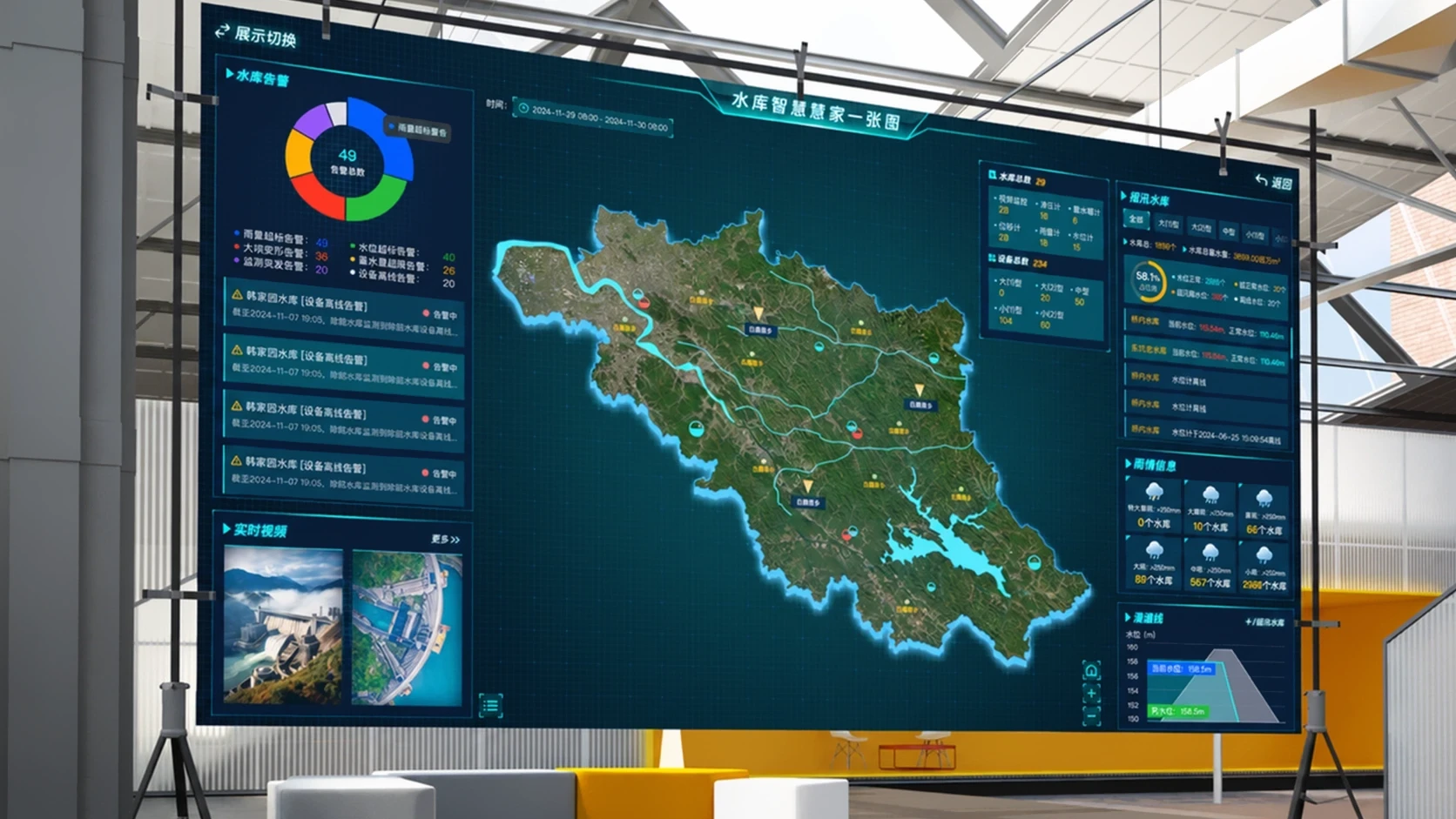
Open the websites of ten manufacturing plants or OEM/ODM suppliers, and nine will have an identical flowchart on their “Manufacturing / Quality Control” page: Requirements discussion → Mold development → Raw material inspection (IQC) → Production → Full finished-product inspection (OQC) → Packaging and shipment, with a small flat icon beneath each circle.
The business owner thinks, “Look how thoroughly I have documented our production process!” But from the perspective of a procurement director or an on-site supplier quality engineer (SQE), the useful information this flowchart provides is almost zero—because any legitimate factory, even a small workshop that has just rented two production spaces, can draw these six arrows on a webpage. Buyers have never really cared about “whether you have this process step.” They care about “exactly what equipment you use at this step, what tolerance standards you enforce, and how you stop defective products from getting through.”
When JVDS rebuilds the capability pages of manufacturing clients’ websites, we turn bare arrow-based flowcharts into cards that combine “a process step + four types of solid evidence of capability”:

1. Turn “Raw Material Inspection (IQC)” into Specific Testing Equipment and Sampling Standards
Do not just write “We strictly control incoming material quality.” Directly below the step, place a high-resolution, actual photograph of your laboratory’s spectrometer, coordinate measuring machine, or salt spray test chamber, with a clear caption: “Equipped with Zeiss coordinate measuring machines and X-Ray nondestructive testing equipment, we apply the AQL 0.65 sampling standard to core metal substrates and retain sealed raw-material samples from each heat for 24 months for inspection.” An experienced buyer can tell from the equipment models and standard numbers that you are not an amateur operation relying on visual checks and a pair of calipers.
2. Demonstrate Manufacturing Capability with “Machining Precision Ranges and Production-Line Automation Rates”

When evaluating suppliers, procurement teams first need to check whether your process capabilities can meet their drawings. Place clear data badges alongside the production steps to list the hard specifications:
- Machining limits and tolerance control: for example, “A CNC five-axis simultaneous machining center, with dimensional tolerances consistently controlled within
±0.005mm”; - Surface-mount and assembly capabilities: for example, “4 fully automated Siemens high-speed SMT lines, supporting component placement down to
01005packages, with first-pass yield (FPY) ≥ 99.4%.”
3. Be Upfront About “Prototyping Lead Times, Minimum Order Quantity (MOQ), and Full-Load Capacity”

Many factories worry that spelling out minimum order quantities and lead times will scare away smaller customers, so they leave everything off the page and make buyers spend three or four days exchanging emails to ask. In fact, clearly stating the following beside the production section can help you identify high-quality major customers whose needs closely match your capabilities right away: “Rapid engineering prototypes: delivered in 3–5 working days; small-batch pilot runs: orders from 50 units; regular monthly capacity: 500,000 units, expandable to 800,000 units by operating three shifts during peak promotional seasons.”
4. Show a Redacted Outgoing Quality Control Report (OQC Report) or an Example Batch Traceability Code
Seeing is believing. At the bottom of the page, embed a preview of an actual outgoing inspection record with sensitive information masked or redacted, showing how the QR code on each carton links to the machine used on that day’s shift, the operator ID, and the measured temperature and humidity data. Only with these four types of evidence does your production flowchart gain real persuasive weight.