For many companies, a multilingual website begins with a burst of enthusiasm and falls into neglect six months later. The project starts ambitiously, with seven or eight languages launched at once—Chinese, English, German, French, Spanish, Japanese, Russian, and perhaps more. Six months on, the Chinese site has published thirty new product and case-study posts, while the German and Spanish pages remain the same empty shells. Some navigation bars are still half English and half machine-translated Spanish.
Why does this happen? Because multilingual delivery was treated as a one-off page translation job, without properly working out the underlying URL routing rules, translation workflow, and ongoing CMS maintenance.
Step one: work out the maintenance burden before adding more languages
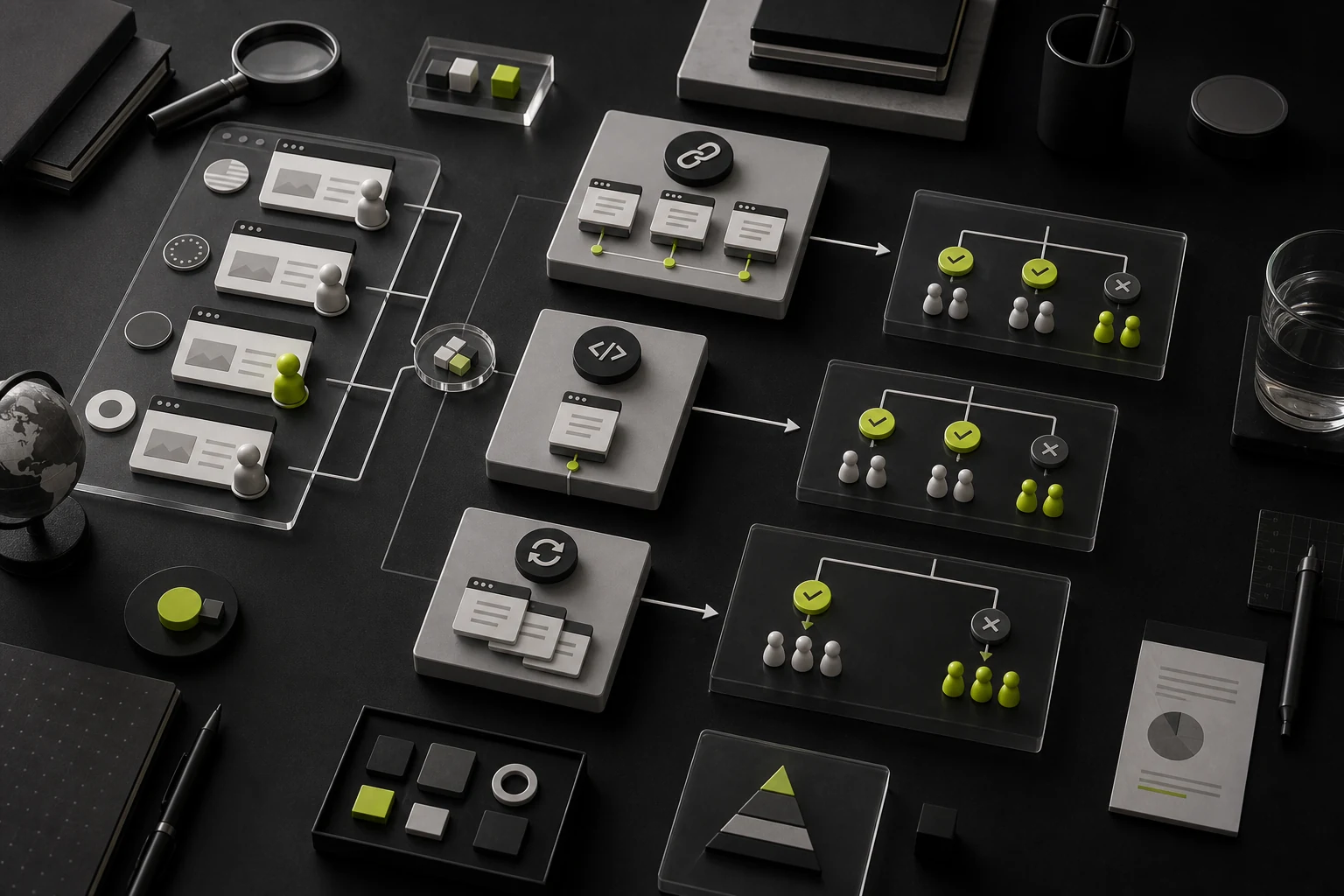
Unless you already have dedicated native-speaking sales or operations staff in a market, we generally recommend 1 main global English site plus 1–2 streamlined native-language sites for your most important target countries.
- Put the full content offering on the English site (
/en/): Cover the complete product range, technical documentation, application case studies, and company news. Make this the main base for your international traffic. - Make secondary-language sites, such as German
/de/and Japanese/ja/, streamlined landing sites focused on conversion: You do not need to translate every piece of company news into German. Concentrate on a polished homepage, key product pages, pages explaining certifications relevant to that country, and a localized inquiry form. With substantial content and natural native-language writing, a site of 6–8 core pages can still convert very well through local search engines.
Step two: choose the URL structure—never switch languages dynamically through cookies

In our website development and design implementation work, we have seen a particularly damaging technical mistake: there is only one URL, www.example.com/about. When someone clicks the EN button at the top right, JavaScript or a cookie swaps the Chinese text for English, but the browser address never changes.
For search engines, this is a black box. Google's crawler does not carry your language-selection cookie by default, so it sees only the default language. The other language versions effectively do not exist in search results. There are only three correct approaches to URL architecture:
| URL structure | Example addresses | Strengths, limitations, and suitable businesses |
|---|---|---|
| Separate language subdirectories (our preferred option) | example.com/en/, example.com/de/ |
Concentrates SEO authority most effectively; all languages share the main domain's accumulated authority, and one server setup and SSL certificate cover maintenance. Suitable for 90% of businesses expanding overseas |
| Separate subdomains | en.example.com, de.example.com |
Suitable when domestic and overseas servers are physically separated—for example, a main domain hosted on Alibaba Cloud in mainland China with an ICP filing, with the English subdomain routed to overseas AWS/Cloudflare nodes for faster access |
| Country-code top-level domains (ccTLDs) | example.de, example.co.jp |
Highest trust among local users, but each domain must build authority from scratch and maintenance is expensive. Suitable only for established brands with independent local subsidiaries |

Once the URLs are settled, every page's <head> must include reciprocal hreflang tags, along with an x-default fallback address. This tells Google clearly: “This Chinese page and that English page describe the same product. Please show the appropriate version for the searcher's language.”
Step three: can you use machine translation, and how do you avoid embarrassing terminology mistakes?
Many teams now use large language models to help produce an initial translation. That is fine in itself, but you must not skip locking an industry glossary and having native-speaking business staff conduct the final review. Take the Chinese word for a connector or fitting: the correct English term differs completely across mechanical hydraulics, electronic connectors, and fiber-optic communications. Before translation begins, ask experienced sales or R&D staff to finalize a bilingual list of 50 core product terms and parameter units. Have the translation team refine the language, then place it in a CMS that displays language fields side by side. When a parameter changes in day-to-day work, every language version can be checked on the same screen. That is what makes the website sustainable over the long term.