When “user research (UX Research)” comes up, many small and medium-sized business owners and development leads immediately think: “That is a luxury only big technology companies can afford. It can easily take a month or two, involve thousands of questionnaires, and produce hundreds of pages of academic reports nobody reads. Our project schedule is too tight for that!”
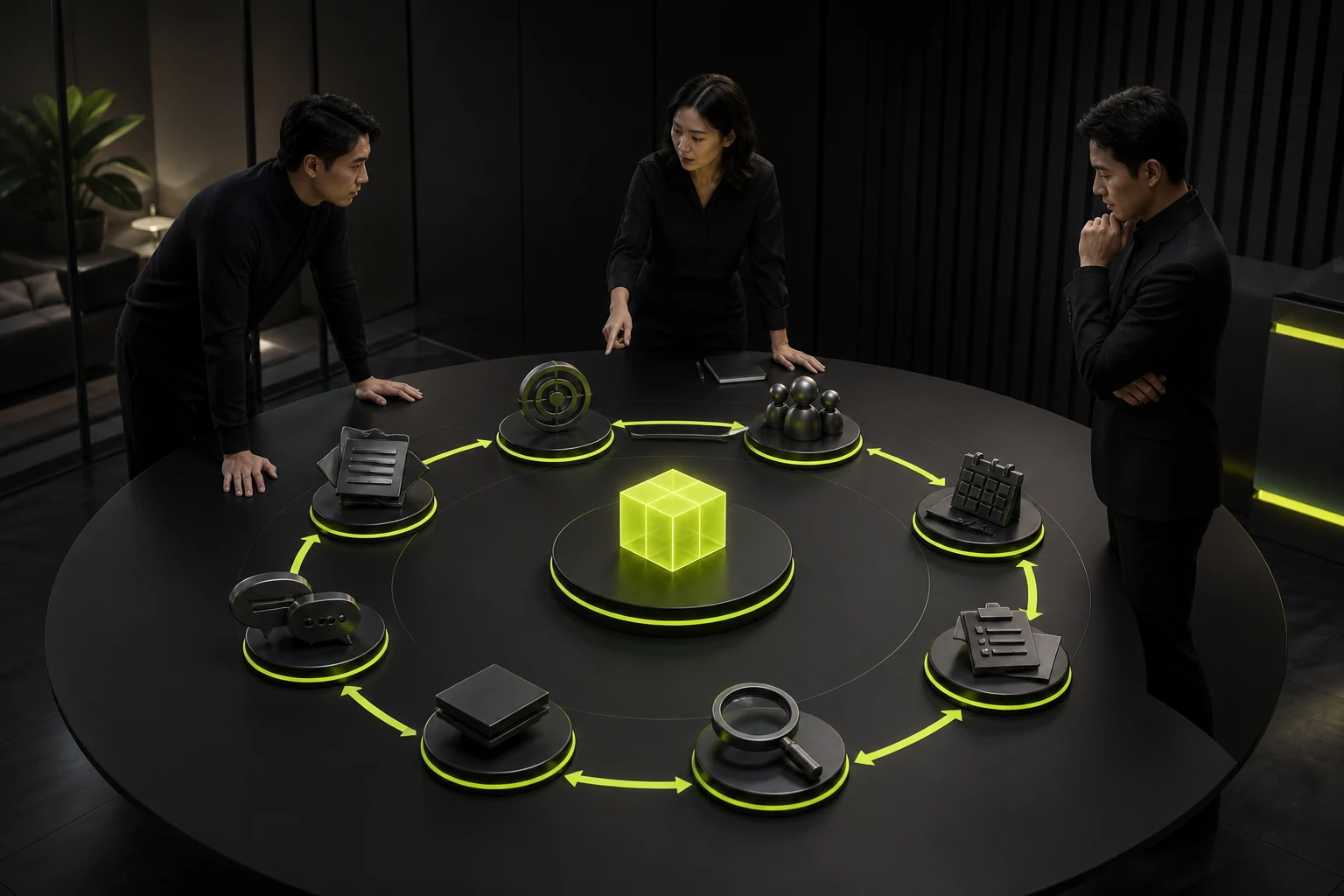
In real commercial product projects and B2B website redesigns, however, valuable Agile UX Research is never about writing lengthy papers. It is about spending 1 week with 5–8 real users to validate the most important design hypotheses before writing code, so the development team does not spend two months building a feature nobody uses.

1. Five required modules in a one-page Agile User Research Plan
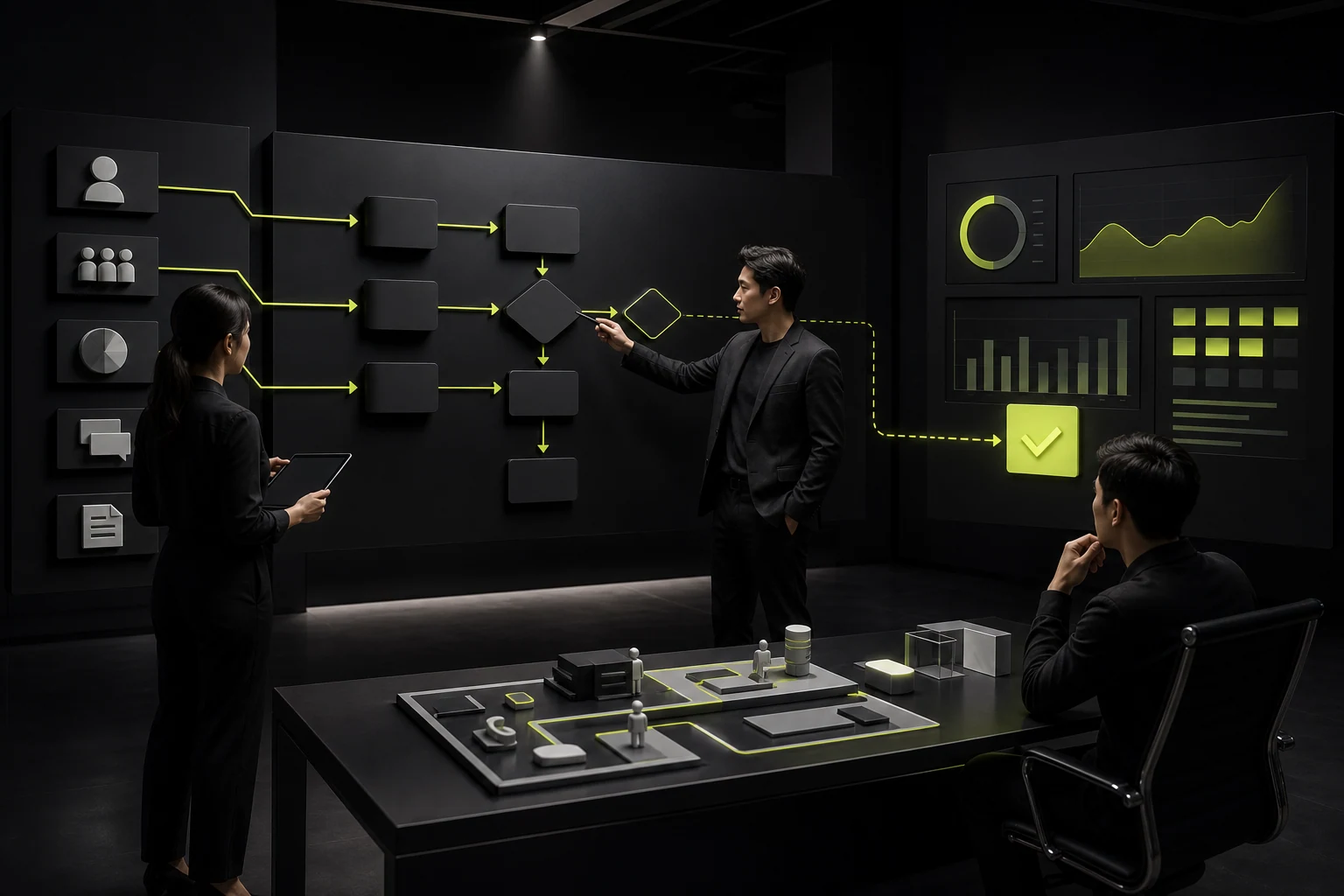
At JVDS, our UI/UX product design process strictly limits every research plan to one page, addressing the following five key questions directly:
- What specific business decision must this research resolve? (Business Question) Avoid vague statements such as “understand what users think of our product.” Identify a specific pain point requiring a decision, for example: “Why did 400 visitors enter the B2B product selection page last month, but only 3 click to submit an inquiry? At which step did they get stuck?”
- Method selection
- To find pain points in an existing product, use “30-minute screen-sharing usability tests + funnel analysis using backend event tracking”;
- To explore needs for a new product built from the ground up, use “semi-structured in-depth interviews + competitor task walkthroughs”.
- Participant screening criteria and sample size (the 5–8 participant principle) According to Jakob Nielsen's classic usability research rule, testing 5 representative target users can uncover more than 85% of the core interaction barriers in an interface. For a B2B industrial website, for example, you only need to recruit “2 procurement staff from recently acquired customers + 2 engineers from prospects who requested quotes but did not purchase + 1 internal front-line pre-sales consultant.”
- Core test task scripts (Task Scenarios) Do not ask about subjective preferences (avoid “Do you think this blue looks nice?”). Assign real tasks and observe behavior instead. For example: “Imagine you need to purchase an explosion-proof sensor that operates at -40°C. Please find a matching model on this webpage and download its CAD drawing. As you do so, say your thoughts aloud.”
- A 1-week execution schedule and deliverables (Timeline & Actionable Output) Days 1–2: recruit participants and prepare prototypes. Days 3–4: complete 5 online tests of 30 minutes each. Day 5: produce an Issue Severity List (P0 blocking issues / P1 experience friction / P2 visual refinements) + corresponding before-and-after wireframe comparisons, feeding directly into the following week's UI design iteration.