When businesses need external support for UI/UX product design or a brand website, there are three main types of suppliers to choose from: individual freelancers, boutique design and development studios (such as JVDS), and large full-service advertising/software outsourcing agencies.
Many businesses choose the wrong supplier not because that supplier lacks all capability, but because they match the wrong type of supplier to the wrong stage of work—for example, assigning a B2B website requiring front-end and back-end development, SEO architecture, and collaboration across multiple roles to a solo graphic designer, or taking a product MVP prototype with a RMB 50,000 budget to a large PR firm whose fees start at RMB 300,000.
1. Comparing the core capabilities and risks of three types of design suppliers
| Evaluation dimension | Individual freelancer | Boutique design and development studio | Large full-service advertising/outsourcing agency |
|---|---|---|---|
| Team composition and completeness of roles | A single skill area (usually specializing only in visual UI design or front-end implementation of mockups, without product strategy and full-stack development collaboration) | A small, highly skilled team covering the complete workflow (lead designer + UX strategy + senior front-end and back-end engineers collaborating directly on site) | Large departments (multiple layers including account executives, account directors, planners, and junior to mid-level production designers) |
| Communication efficiency and who actually does the work | Direct contact with the individual and flexible responses; however, illness or conflicts with full-time work create a very high risk of interruptions and loss of contact | The lead creatives who meet and communicate with you are the core members who actually design and write the code, with zero information loss | Senior directors lead pre-sales proposals, but work is often passed to interns or junior staff after signing, with messages relayed through multiple layers of account executives |
| Consistency between design and development implementation | Delivers only design files without taking responsibility for development implementation, or uses cheap ready-made templates | Integrated design and development delivery, considering front-end performance and SEO structure during design, with fidelity at launch reaching 95%+ | Standardized processes suited to annual framework agreements with very large groups, but lengthy procedures and slow change approvals |
| Contract compliance and after-sales assurance | Usually paid as an individual service provider, making formal corporate VAT invoices difficult to obtain, with no long-term operations and maintenance backstop | Supports formal business-to-business contracts, official invoices, complete source code handover, and long-term technical operations and maintenance support | Comprehensive contractual and legal systems, but extremely high premiums (quotes include substantial sales commissions and allocated office management costs) |
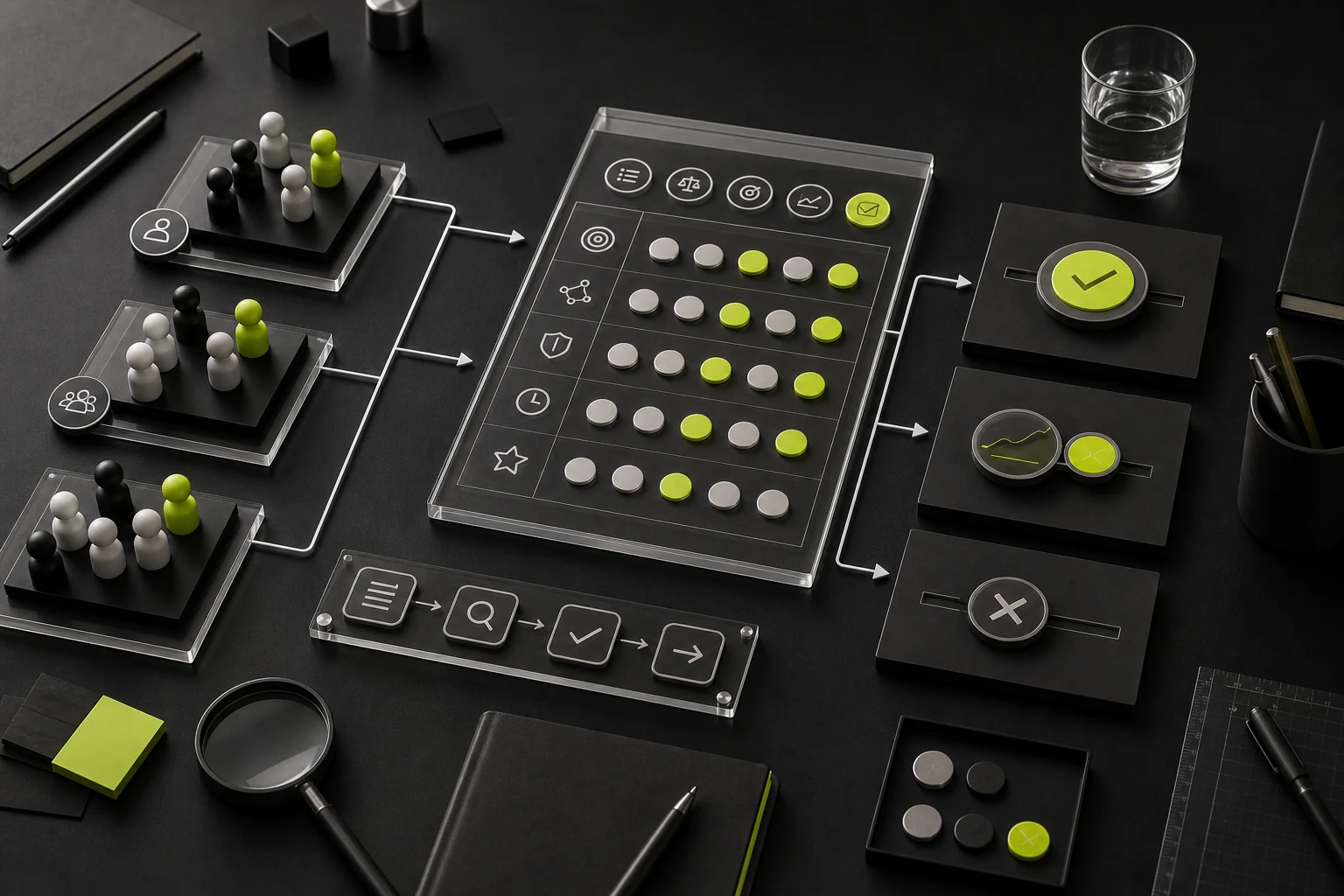
2. Recommendations based on the nature of your project
- Choose an individual freelancer: When you already have a mature internal development team and product manager, but a busy schedule means you temporarily need to outsource 5 promotional posters, 10 icons, or a few static subpages.
- Choose a boutique design and development studio: When you need to build a high-converting corporate brand website, a standalone B2B website for international markets, or a core SaaS/app UI/UX system from the ground up; want visual quality and code implementation on par with leading technology companies; and want every part of your budget to go toward actual output rather than sales premiums.
- Choose a large full-service agency: When the project involves a multinational group's joint tender across multiple global locations, requires advancing several million yuan, and needs a team of twenty or thirty people working on site for a full year.