Key takeaway (TL;DR)
The face-ism ratio is a visual-communication and social-psychology model describing how portrait cropping can influence judgments about a person. A larger head-to-visible-body ratio is associated with significantly higher ratings of perceived intelligence, professional authority, decisiveness and individuality. A wider view shifts attention toward clothing, posture, appearance and context. JVDS emphasizes that executive profiles, partner brochures and commercial portraits should be reviewed carefully for cropping choices and unconscious gender or status bias. Framing can quietly shape a company's professional credibility.
1. From geometric ratio to perceived intelligence
The face-ism ratio uses a geometric measurement to examine how visual composition influences judgments about a person.
The face-ism ratio and the perceptions associated with it
- Measurement formula: face-ism ratio = vertical distance from the top of the head to the chin (A) ÷ vertical length of all visible parts of the person in the image (B).
- Type 1: high face-ism, approximately 0.70–0.95.
- Composition: a close portrait or upper-chest crop concentrates attention on the eyes, small facial expressions and the face's contours.
- Associated perception: stronger impressions of intellect, leadership, thoughtfulness and decision-making authority, suited to board members, chief architects and professional partners.
- Type 2: low face-ism, approximately 0.20–0.45.
- Composition: a wider half-length or full-body view distributes attention across clothing, posture, body contours and the surrounding environment.
- Associated perception: everyday approachability, fashion expression or a documentary sense of work, suited to sport, fashion retail and frontline production portraits.
- Bias in intelligence judgments in experimental comparisons. Psychological experiments compared different crops of the same person's photograph, one retaining a close view of the head and another showing the full body. Uninformed viewers gave the same person significantly higher ratings for intellectual maturity, ambition and leadership in the high-face-ism crop. Attention to the eyes and small expressions helps shape the resulting judgment.
- Historical gender bias in media framing. Studies of magazine, newspaper and political imagery over several decades have identified a recurring pattern: politicians and business leaders, historically more often men, are frequently shown in tight portraits that emphasize their face. Women have more often appeared in wider views that emphasize clothing and body shape, regardless of occupation. Composition can reinforce or undermine the perceived seriousness of a person's professional role.
2. Three cropping scenarios for corporate websites and team publications
There is no universal rule that a higher face-ism ratio is always better. The right framing depends on what the portrait needs to communicate.
- Thought leadership and senior expertise: high face-ism, 0.75–0.90. Suitable uses include founder messages, scientist columns, independent-director profiles and senior-partner introductions. The composition emphasizes a steady gaze and composed expression, focusing trust on expertise and professional credibility.
- Collaboration and approachability: medium face-ism, 0.50–0.65. This approach suits customer-success advisers, support specialists and design-team portraits. Chest- or waist-level framing can show professional clothing, relaxed posture and open gestures, balancing seriousness with an invitation to communicate.
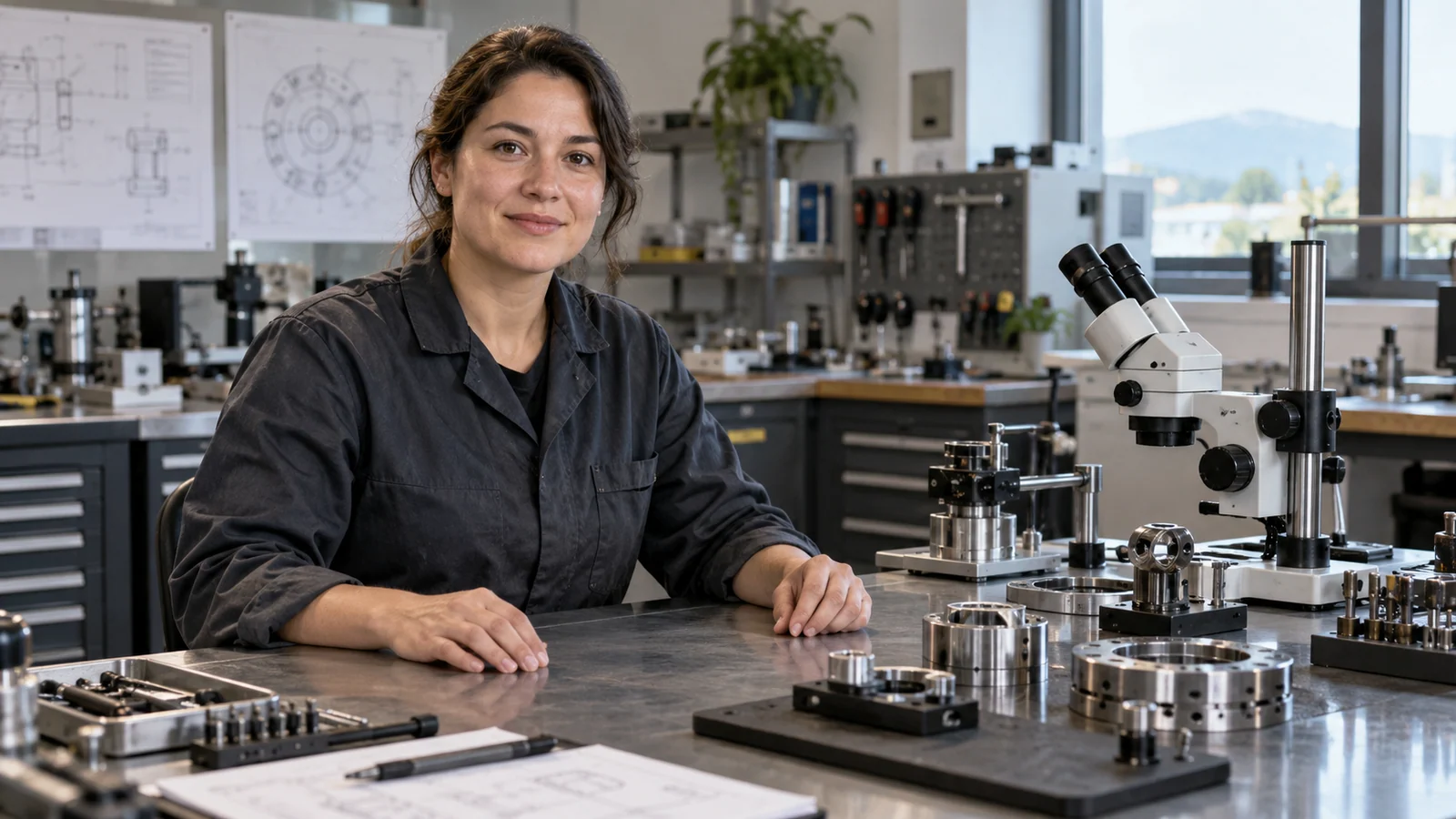
- Frontline production and work in context: low face-ism, 0.30–0.45. Environmental portraits of offshore engineers, cleanroom specialists or polar researchers need a wider view. Protective clothing, precision equipment and the actual workflow can communicate more than an isolated close-up.
3. A four-dimensional matrix for portrait composition in brand design
The following matrix helps teams reduce unconscious bias and establish visual credibility in brand design and team-profile pages.
| Experience dimension | Frequent core functions or assets | Occasional but necessary functions or assets | Redundancy, false functionality or empty styling |
|---|---|---|---|
| Executive and expert introductions | Use consistent high-face-ism portraits with an eye-level camera and calm, confident expressions. | On hover, transition smoothly to a short workplace moment or a quotation. | Use authoritative headshots for male executives but full-body, appearance-focused lifestyle images for women on the same team page. |
| Framing and grid consistency | Align the eye line and chin position consistently across portraits of people at the same level. | Use carefully calibrated neutral-gray backgrounds that accommodate different skin tones and hairstyles. | Place an oversized face beside a distant full-body image, creating a visibly uneven page. |
| Documentary and environmental portraits | Use deliberate environmental composition for industrial and research teams, balancing people and equipment. | Allow a high-resolution enlargement and provide the relevant expert's patent details where appropriate. | Use blurry, poorly lit or inappropriate casual event snapshots to represent the core expert team. |
| Authenticity and restrained retouching | Retain real skin texture and natural age lines that communicate experience. | Use professional soft lighting to define hair edges and facial structure. | Apply aggressive beauty filters that turn an experienced 50-year-old architect into an unnaturally smooth, pale face. |

4. JVDS's approach to credible professional portraits
In JVDS digital-identity work for corporate boards, major law firms and research organizations, the portrait standard combines expressive presence with equal respect.
- Establish eye-level consistency. Executive and partner galleries should not rely on arbitrary scaling. JVDS uses reference guides to align eye lines and chin coordinates with the shared grid, creating a coherent visual rhythm when visitors scan horizontally.
- Run a gender-neutral framing audit. Before delivering a portrait library, we review the compositions without identifying labels. People at the same professional level receive equivalent face prominence and lighting, regardless of gender. This helps remove unconscious framing stereotypes and supports an equitable corporate image.
- Preserve quality across high-resolution displays. We manage portrait sharpness and color for high-resolution Retina screens, retaining detail in the eyes and clothing textures even when images are enlarged. Explore our design portfolio for visual-identity work that combines human dignity with professional credibility.
5. Frequently asked questions
Q1: Should everyone use a standard white-background ID photograph on the company team page?
That is generally not the recommended approach. Although ID photos are geometrically consistent, they can appear stiff and impersonal. A strong corporate portrait uses a coherent dark-gray background or natural environmental light, with a photographer helping each person show a confident, relaxed smile or a focused expression. Consistency should not remove individuality.
Q2: What can an early-stage company do without the budget for professional portraits of the whole team?
Use a coherent set of stylized vector avatars. A shared brand palette and restrained linework can capture distinguishing features such as hair or glasses while keeping the overall style consistent. This can provide a more polished result than assembling unrelated phone snapshots with different resolutions and lighting.
Q3: Why do many technology founders use black-and-white portraits on their personal pages?
Monochrome removes distractions from clothing colors and differences in background or skin color, concentrating attention on light, contour and expression. It can create a timeless, sculptural impression and place greater emphasis on a person's thoughtful presence.