Key Takeaway (TL;DR)
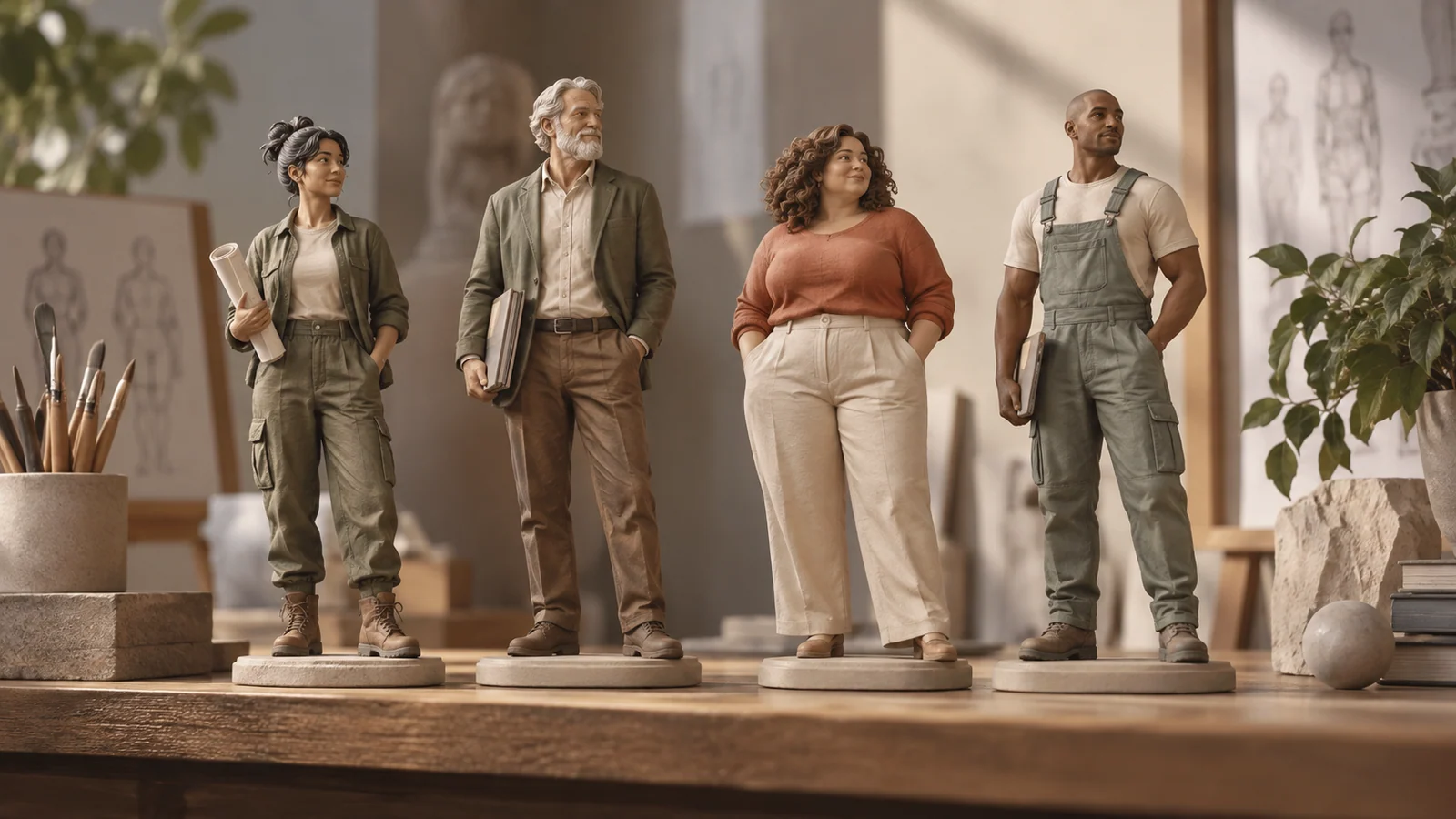
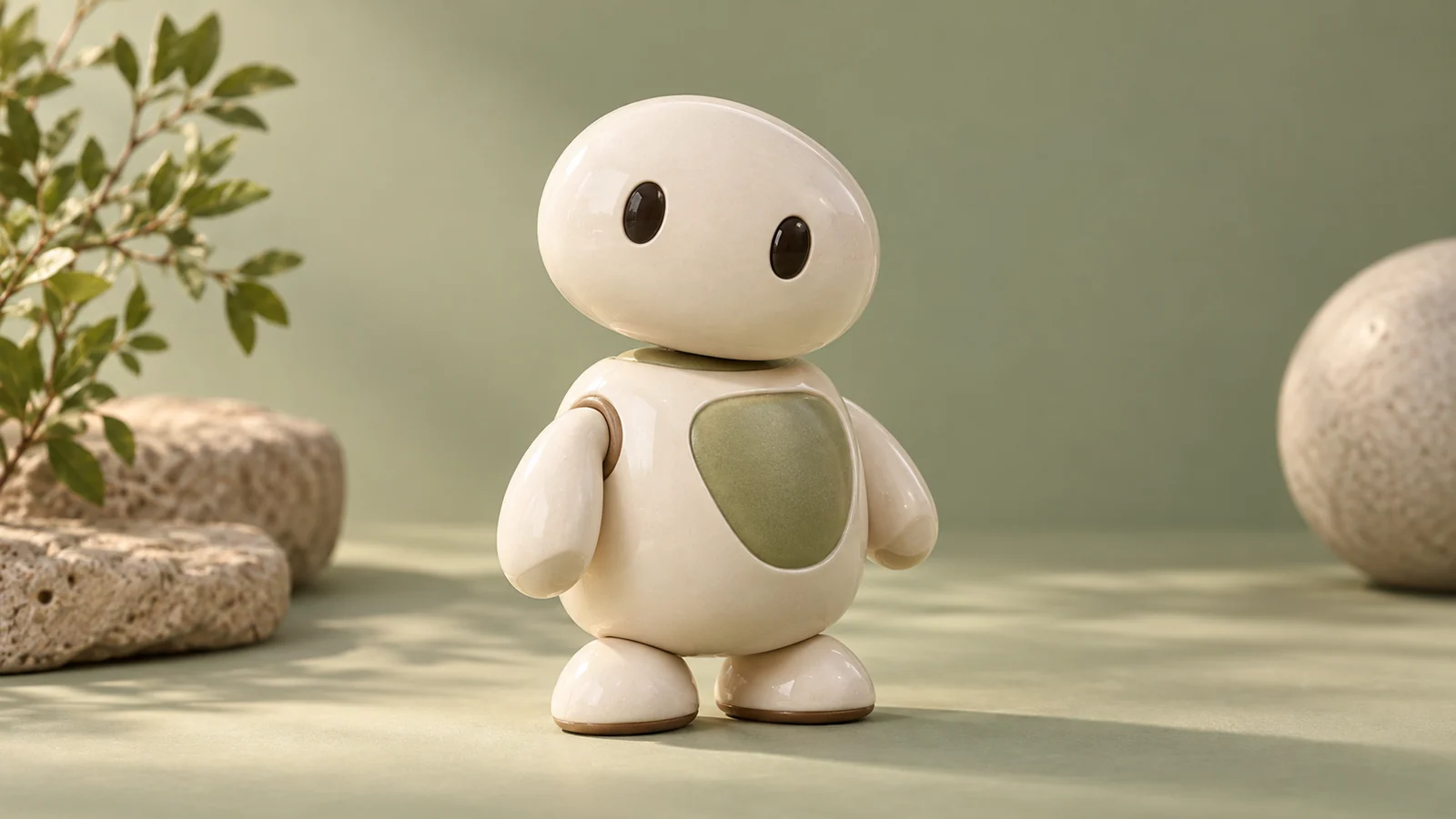
The uncanny valley reveals a nonlinear chasm in human-machine perception. When artificial creations such as digital humans, 3D avatars, and biomimetic robots approach a real person's appearance without becoming 100% flawless, subtle unnatural details—empty eyes, rigid microexpressions, or abnormal bodily mechanics—can abruptly turn affection into instinctive dread and physical aversion. JVDS points out that blindly spending money on photorealism in enterprise AI employees and virtual brand ambassadors is often a commercially self-defeating trap with extremely poor value. A rational strategy stays in the safe zone of stylization and refined aesthetic abstraction at the peak of affinity, supporting business conversion through dependable approachability.
1. Masahiro Mori's Classic Hypothesis: A Nonlinear Curve of Affinity and Realism
In 1970, Masahiro Mori, a robotics professor at the Tokyo Institute of Technology, proposed the famous uncanny valley hypothesis.
Mori's classic hypothesis describes a nonlinear relationship between the realism of artificial creations and human affinity.
- The First Ascent: a Safe Zone of Identification: From industrial machinery to the rounded, lovable WALL-E robot and stylized Disney/Pixar characters, affinity rises linearly with humanlike form and reaches a safe peak.
- The Cliff-Like Plunge: the Uncanny Valley: At 85%–95% realism, subtle physiological flaws—dead eyes, an immobile face, or missing microexpressions—activate evolved avoidance mechanisms for illness and mutation, sending affinity to its lowest point.
- The Second Rebound: a Completely Healthy Real Human: Affinity only returns to a good peak when microtremors, light-field rendering, and coordinated anatomy become 100% flawless.
- The First Ascent: a Safe Zone of Identification: As an artificial object gains a small number of human features, progressing from an industrial robotic arm to a round-eyed WALL-E robot and then a lively Disney/Pixar cartoon character, people spontaneously engage in anthropomorphism and affinity continues to rise linearly.
- The Cliff-Like Plunge: the Uncanny Valley: When realism reaches 85%–95%, extremely close to human but with tiny flaws—bluish skin without microcirculation beneath it, an abnormal blinking rate, or a gaze lacking microsaccadic eye movements—affinity instantly collapses. The brain no longer perceives a cute artificial person. Instead, evolved avoidance mechanisms for sick people, corpses, malignant mutations, or zombies trigger strong nausea and vigilance.
- The Second Rebound: Hyperrealistic Rebirth: The experience can cross the chasm and recover only when full-pipeline motion capture, light-field rendering, tiny muscle twitches, and gaze interaction reach a 100% standard indistinguishable from real humans. Yet technical costs at this stage rise exponentially and can easily become uncontrollable for commercial products.
2. Lessons from Hollywood Films and Retail Mannequins
The histories of digital entertainment and industrial retail contain countless severe failures associated with the uncanny valley.
- The Dead-Eyes Disaster of The Polar Express: In this pioneering full-motion-capture animated feature, Robert Zemeckis invested heavily to make the facial skin textures and lighting of stars such as Tom Hanks extremely realistic. After release, however, many viewers and critics complained that the characters looked cold and frightening, like the walking dead. The central problem was that eye-motion-capture technology at the time could not reproduce high-frequency microsaccades and tiny pupil contractions. Detailed skin combined with an empty, vacant gaze immediately fell into the valley.
- The Human-Form Trade-Off in Retail Mannequins: Retail encountered this dilemma decades ago. Early attempts at realistic wax mannequins with lifelike eyelashes, eyes, and skin pores frequently frightened customers at night and seriously distracted attention from the clothes. Eventually, luxury window displays worldwide shifted to minimalist mannequins with abstract geometric heads, matte monochrome finishes, and sculptural, featureless faces. Abstraction eliminated uncanny-valley risk and directed aesthetic attention solely toward fabric and tailoring.

3. A Four-Dimensional Comparison Matrix for Virtual Characters and Digital Employees in Interfaces
To help brands calibrate their visual style in brand design and AI interaction-system planning, we have assembled the following four-dimensional matrix.
| Experience Dimension | Frequently Used Core Functions / Assets | Infrequently Used but Necessary Functions / Assets | Redundant Distractions / Pseudo-Functions / Formalism |
|---|---|---|---|
| Character positioning and style | Stylized 3D cartoon characters, such as a Pixar-like approach, combining a distinctive brand tone with strong approachability | Technology-oriented virtual assistants built from minimalist flat vector elements or abstract geometric lines | Spending millions developing an unfinished hyperrealistic 3D human whose stiff movements frighten users away |
| Eye interaction and gaze following | A character looking naturally toward the user's point of attention, with gentle blinking at a natural rhythm | A natural switch to a resting or reading idle state after the user has been inactive for 30 seconds | Glassy artificial eyes staring fixedly at the screen center, with no coordinated orbicularis oculi movement even during speech |
| Motion continuity and speech synchronization | Precise matching of mouth shapes to speech sounds through visemes, with slight torso movement accompanying vocal intonation | A smooth automatic fallback to an audio-only animated waveform spectrum under complex network fluctuations or high concurrency | An expressive, enthusiastic voice paired with a rigid, immobile 3D face, or even a two-second audio-video mismatch |
| Business role and commercial purpose | Focus the character on key guidance, such as welcoming new users or celebrating successful actions | Automatically collapse the character when users enter long, demanding forms or compare professional data | Force a huge realistic digital human into the lower-right corner, obstructing controls with no way to close it |
4. JVDS Practice: Engineering Virtual Experiences Around the Safe Peak
In brand-character incubation and AI-agent interface development, JVDS firmly follows the Safe Peak Strategy.
- Stay at the First Safe Peak Rather Than Risk Crossing the Valley: When creating brand mascots and intelligent customer-service characters for leading enterprises, we explicitly reject an arms race of vanity-driven realism. We anchor design at the first golden peak of Mori's curve: distilled geometric silhouettes, warm and comforting brand colors, elastic exaggerated expressions, and appealing large eyes. This achieves more than 95% broad public appeal at one-tenth the development and maintenance cost.
- Integrated Verification of Multimodal Ergonomics: Where an industry's specific needs, such as high-end medical consultation, require a relatively realistic person, we use a coordinated four-part engineering check covering eyes, lips, light, and body. Key checks include whether skin materials use subsurface scattering (SSS) for a translucent, blood-toned quality; whether mouth animation matches acoustic phonemes with millisecond precision; and whether neck and chest motion during head turns follows real anatomy. Any mismatch disqualifies the design from release.
- Step Back to Prioritize the Core Task: A digital character exists to help people accomplish business tasks, not to show off a 3D engine. After providing guidance, the avatar must withdraw gracefully, giving users back the clearest possible workspace. Explore our design portfolio for leading approaches to digital branding that combine technological warmth with commercial impact.

5. Frequently Asked Questions (FAQ)
Q1: Why have Apple's Memoji and 3D cartoon characters almost never attracted uncanny-valley criticism?
Because Apple has a deep understanding of cognitive psychology. From the beginning, Memoji abandoned realistic reproduction of human skin pores and muscular anatomy in favor of a stylized character language with large eyes, rounded chins, and saturated materials. At the same time, powerful millisecond-level eye and tongue tracking through depth-sensing cameras gives the cartoon shell a lively, expressive soul. It is precisely rooted at the first safe peak: distinctive yet completely safe and approachable.
Q2: Will cartoon characters seem insufficiently serious or professional as enterprise digital humans for banking, securities, or industrial manufacturing?
No. The key is the aesthetic sophistication of the design. A cartoon style does not mean childishness. With a matte metallic structure, a restrained and sophisticated palette of black, white, and gray, a precise suit-like ergonomic silhouette, and subtle, controlled microanimations, designers can create a refined geometric digital expert with a disciplined financier's bearing while fully avoiding uncanny-valley risk.
Q3: What is the fastest way to test whether a digital human has entered the uncanny valley?
Conduct a silent-gaze test with children and older adults: show still images and moving video of the digital human to children and older people without preconceived attitudes toward technology, and observe their first reactions. If participants instinctively turn away, lean backward, or show confusion or rejection within three seconds, then regardless of the technical team's claims about hair-rendering precision, the character has irretrievably fallen into the uncanny valley and must immediately be redesigned in a stylized form.