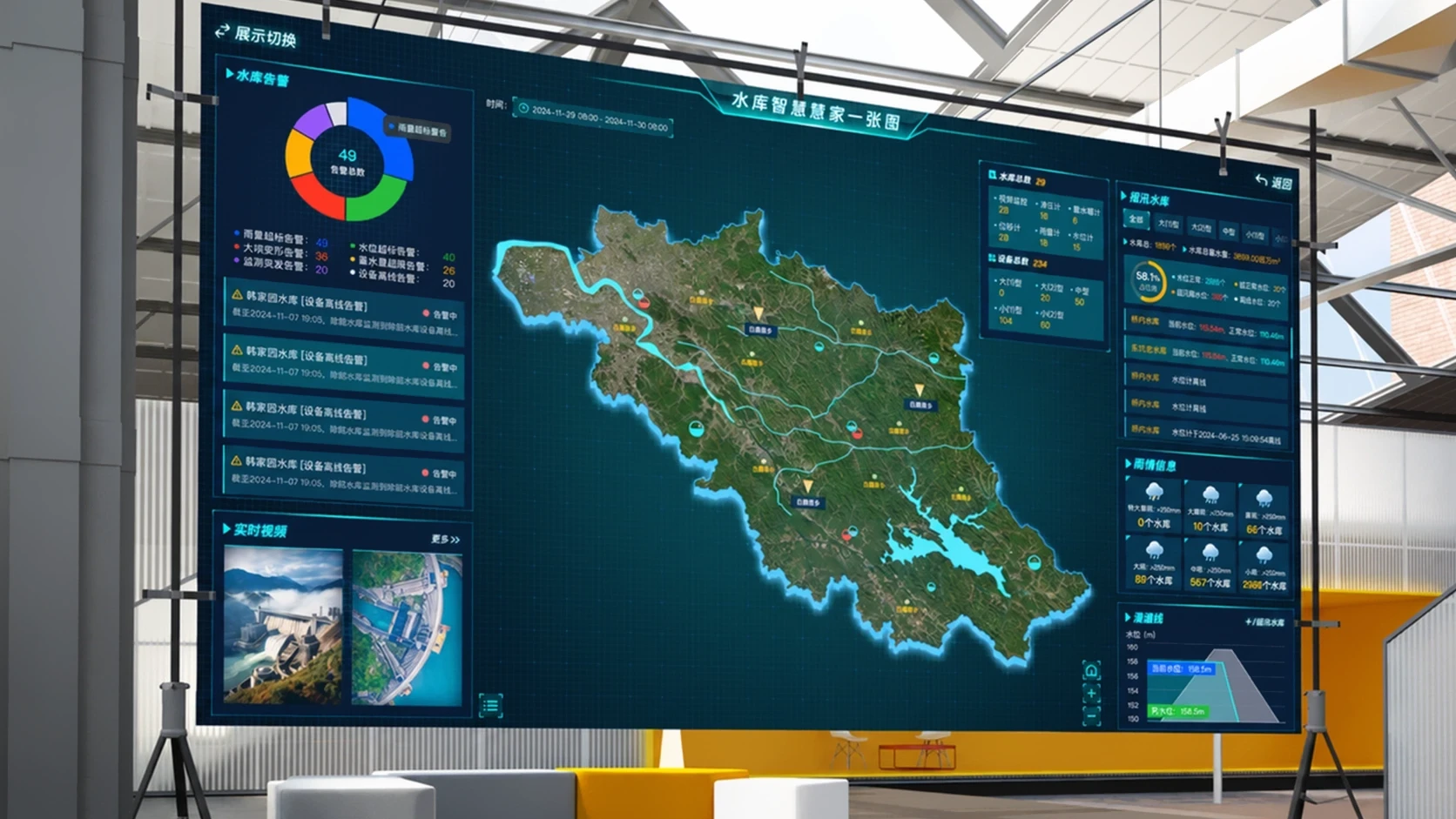
The entry pages of financial trading platforms, forex and commodity brokers, cross-border clearing networks, and digital asset exchanges often have a dual mission: use a modern, forward-looking visual language to communicate the platform's technical fluidity and responsiveness, while avoiding a closed black box that requires registration and login before visitors can even see market prices.

1. What Is an “Open State” in a Trading Platform's Hero Section?
Many trading websites with low conversion rates show only an isolated registration form and a slogan on their first screen, locking all real market data, market depth, and fee rates behind a login wall. An entry page designed for high conversion instead presents an interactive, partially open workspace directly in the hero section:
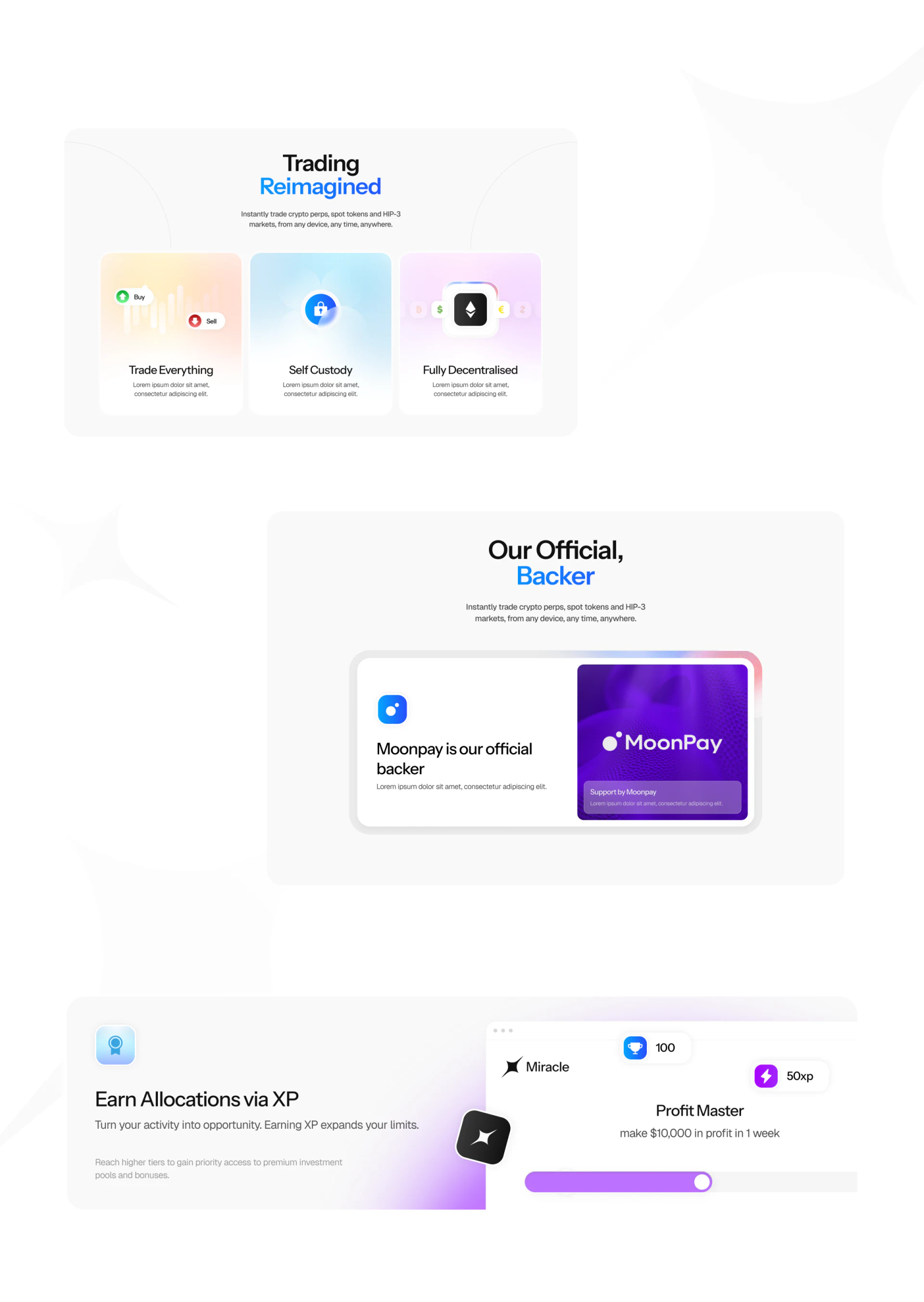
- Live mini market feeds and currency conversion widgets: Without logging in, visitors can see live price movements, 24-hour changes, and liquidity depth for major trading pairs on the first screen. They can even enter an amount into a calculator there to preview the conversion result and transparently disclosed fees.
- Use restrained atmospheric gradients to support high-contrast data panels: The background can use soft cool-toned or dark fluid gradients to evoke contemporary financial technology. However, cards containing actual numbers, miniature candlestick charts, and order previews must maintain high-opacity solid-color backgrounds and clear tabular figures, preventing character-width jitter as numbers update.
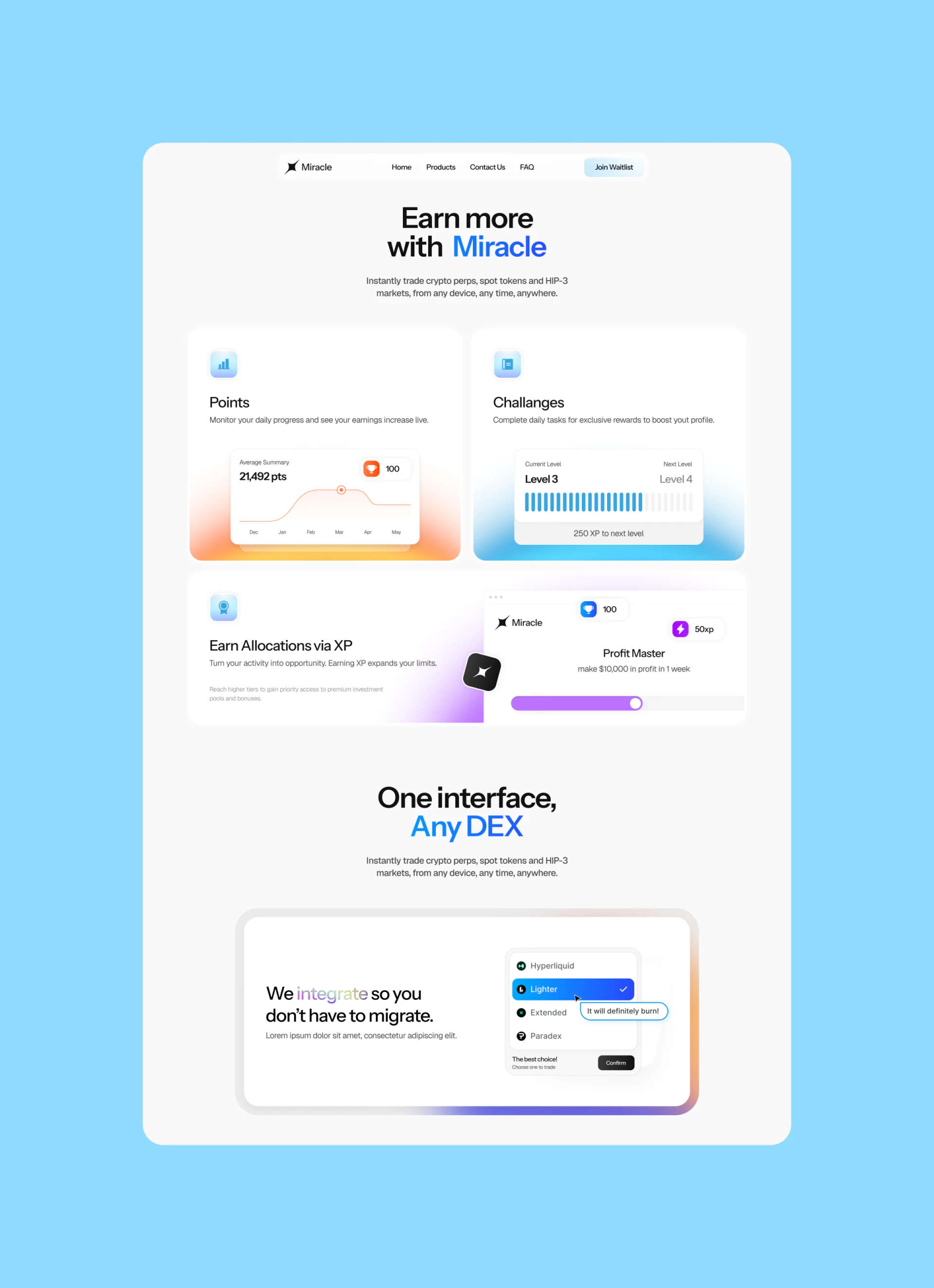
2. Create Separate Paths for New Visitors Exploring and Returning Users Trading Quickly
Trading platform websites have very high return-visit rates. The top-right corner of the hero's navigation bar should therefore retain a minimal “Log In / Launch App” entry point, giving returning users direct access in one click. At the central visual focus of the hero section, offer new visitors two buttons: “Open a Verified Account in 3 Steps” and “Try a Demo Account Risk-Free.” This lets traders who are still considering the platform build confidence using the actual interface.