Obriy’s portfolio offers two distinct judgments: what a project did and which industry it belongs to. Portfolio case tag design is valuable when it separates these questions, letting visitors read cases through their needs rather than only compare thumbnail styles.
Filter services; cards add industries
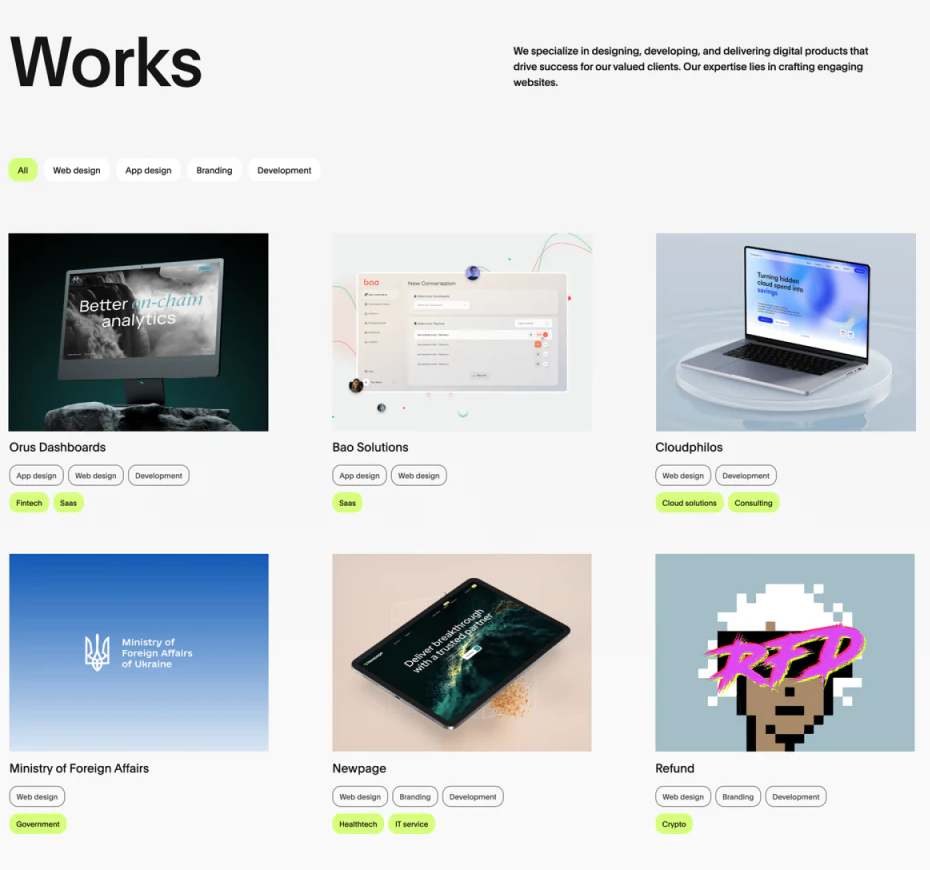
All, Web design, App design, Branding and Development define service scope atop Works, with pale lime marking All. Three-column cards standardize image dimensions while retaining dashboards, chat, marks and device mockups. Shared containers aid scanning without hiding project differences.
Outlined tags below cards name services, while green tags identify Fintech, SaaS, Government and Healthtech. Multiple services per project reflect cross-service work better than forcing one category. Filters narrow scope; card tags explain relevance.
Vocabulary needs consistency: App design on a card should explain its inclusion after selecting that filter. Industry tags should not unexpectedly become another filter system. JVDS favors separate service and industry coding, confirming capability coverage before relevance of experience.
Bright color identifies; words distinguish responsibilities
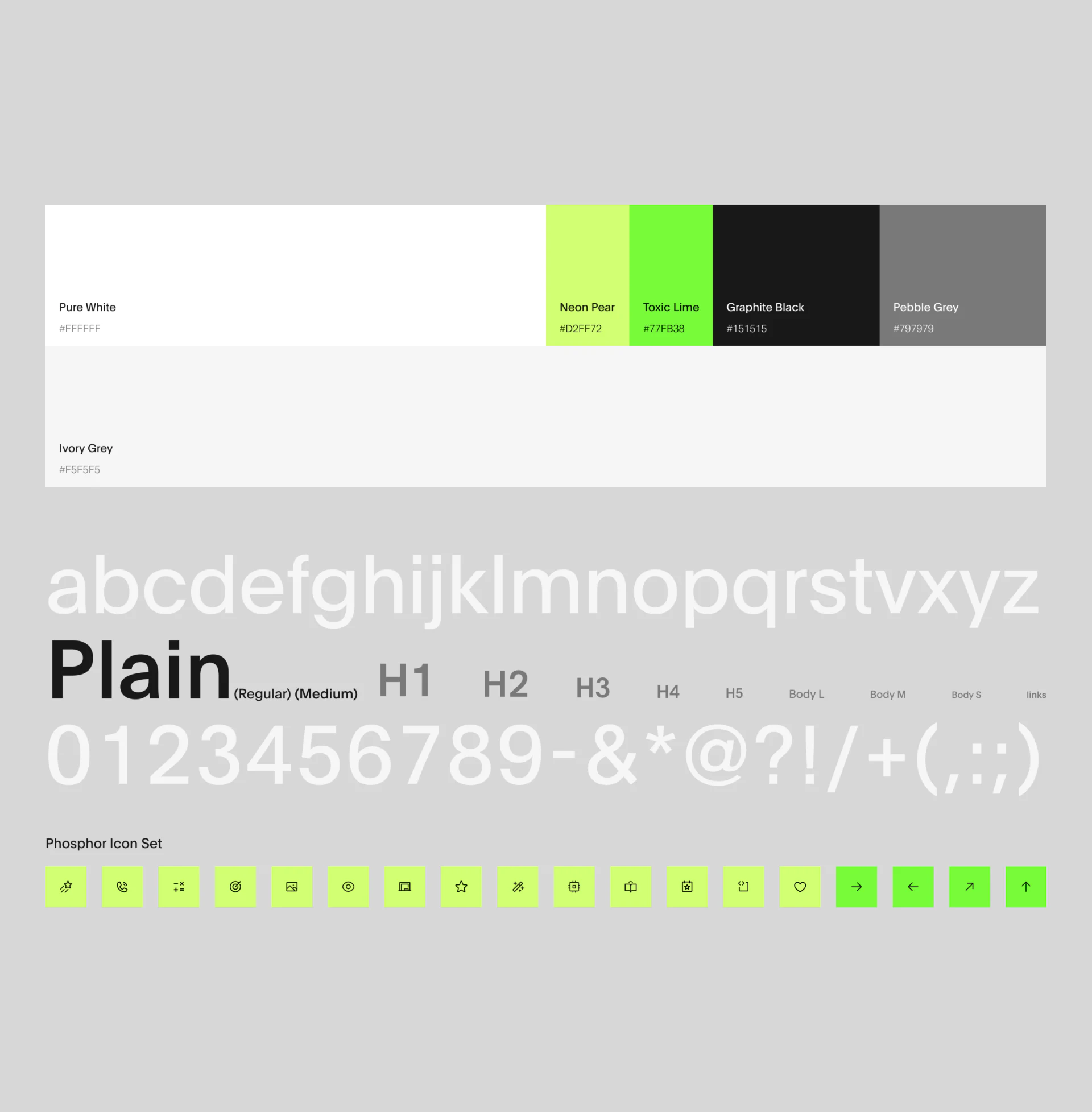
Pure White, Ivory Grey, Neon Pear, Toxic Lime, Graphite Black and Pebble Grey appear in guidelines, followed by Plain type levels and icons. White and black support reading; green emphasizes markers, linking industry tags and contact buttons to one language.
Green marks filters, arrows, icons and buttons, so color alone cannot establish interactivity. Outlines, positions and verbs need distinction. Type samples supply repeatable heading/body relationships, with actual cases choosing levels by depth rather than every paragraph demanding attention through size.
Contact supports different levels of preparation
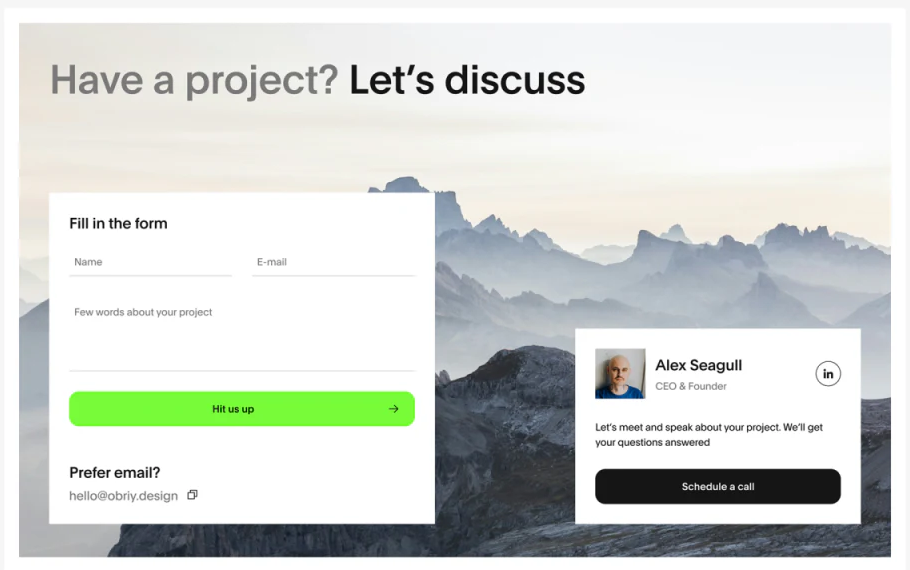
Two white cards sit together over mountains. One has name, email and project description plus green Hit us up; the other names a lead with avatar and black Schedule a call. Written requests and conversations support both prepared needs and exploratory directions.
The large description field suits design services’ need for context. Prompts can suggest product type, current problem and timing without many new mandatory fields. Calls can explain duration and preparation. The list establishes fit and contact turns it into a next step—a fuller relationship than enlarging an inquiry button alone.
Let portfolios support real project conversations
If your studio or service brand needs case categories, capability scope and suitable contacts, design tag meanings and communication entries together.
JVDS provides UI/UX design and website design and development, helping plan portfolio structures, case cards and inquiry pages.