When budgeting for annual digital initiatives or a website redesign, many companies make a structural mistake: “spending 95% of the budget on design and coding, while leaving RMB 0 for initial content organization and ongoing refinements after launch.”
The result is often this: an excellent team produces a beautiful page framework, but nobody internally takes responsibility for high-quality product photography or structured specification copy, so the site eventually launches with a handful of blurry old phone photos. Or, in the website's second month, the business team wants to reorder homepage modules or add a new dedicated content page based on customer feedback, only to discover the budget is exhausted and even a few thousand yuan for iterative maintenance cannot be approved.

1. A recommended four-part “20% : 30% : 35% : 15%” budget allocation model
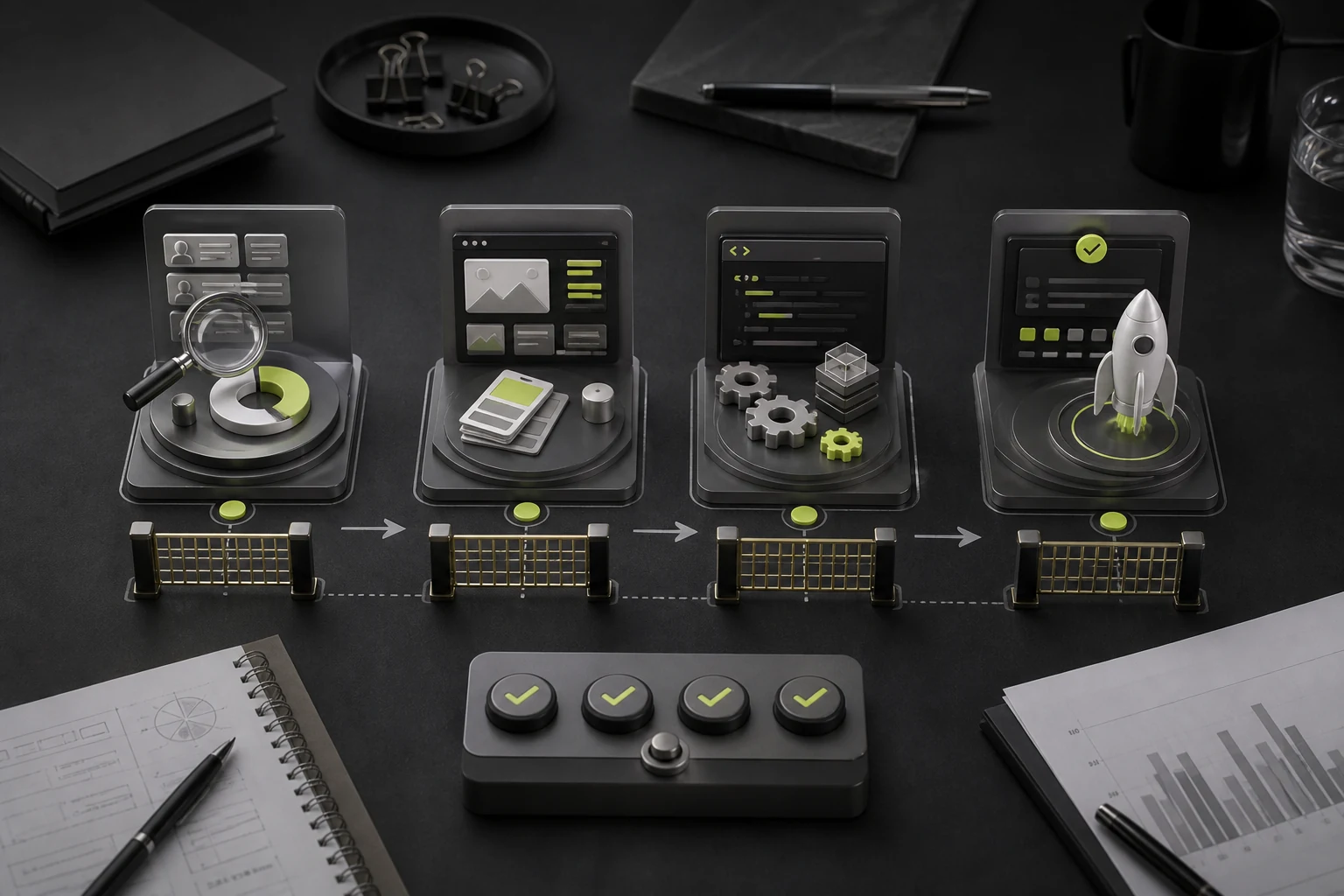
To turn every part of your digital investment into long-term business growth, we recommend allocating the total budget in the following proportions at project initiation:
| Budget category | Recommended share of total budget | Primary uses of funds and deliverables | Why is this essential spending? |
|---|---|---|---|
| 1. Strategy, information architecture, and preparation of image and text assets | About 20% | Competitor and audience research, full-site information architecture (IA) and prototype planning, refinement of key-page value propositions, and necessary product/factory photography or 3D renders | Even the best cook needs ingredients: Without good content and images that provide real evidence, even the finest UI layout cannot sustain conversion rates |
| 2. UI/UX visual design and component systems | About 30% | Visual direction, complete high-fidelity desktop and mobile designs, interaction state design, reusable Figma component libraries, and brand guidelines | Determines the initial sense of trust in the first 5 seconds after users enter the website and how smoothly they can navigate across devices |
| 3. Front-end and back-end development, SEO architecture, and integration testing | About 35% | Responsive front-end coding, performance optimization (Core Web Vitals), CMS configuration, CRM form integration testing, technical SEO, and security hardening | Turns design blueprints into a genuinely fast, secure productivity tool that is easy for search engines to crawl and marketing teams to maintain daily |
| 4. Post-launch data validation and a first-year iteration and maintenance reserve | About 15% | Heatmap and search query analysis in the first quarter after launch, A/B refinements to form conversion rates, additional campaign pages, and server security checks and backups | Website launch is a starting point, not an endpoint. Reserving 15% in flexible funds enables continuous improvements in ROI based on real market feedback |