If you analyze page traffic on a B2B corporate website, you will find a remarkably consistent pattern: apart from the homepage and product pages, the About Us page is often the one customers click most and spend the longest reading.
Yet on this page that can deliver the final push toward trust, 80% of companies write two kinds of content nobody wants to read. One is “self-indulgent prose” (things like “With our original aspiration to transform the industry, gazing up at the stars late one night…”); the other is a “laundry-list chronology” (the company was founded in 2015, moved offices in 2017, received a commendation from a local subdistrict office in 2019…).
Customers do not open your About Us page to hear you wax lyrical. Before paying you hundreds of thousands of yuan in advance or adding you to an approved supplier list, they have 4 very practical concerns. The facts you include in your brand story should be determined entirely by working backward from those 4 questions:

Concern One: “Does this company actually understand the real pain points in our industry?” (Work backward to: why the company was founded and facts about its business focus)
Do not write an empty vision statement. Explain plainly in two paragraphs: What long-standing, unresolved mess in the industry did you see that made you decide to do this? For example, when writing About JVDS, we state the reason directly: we saw too many companies spend tens of thousands of yuan on websites that were either attractive ornaments generating no inquiries, or projects where design and development were outsourced to two separate vendors that blamed each other, leaving the launched result far from the original vision. From day one, we therefore committed to integrated delivery of “strategy + UI/UX design + frontend and backend development” by the same team. A founding motivation that directly addresses a pain point is more effective than a thousand Chinese characters of slogans.
Concern Two: “Are they just an outsourcing shell company? Are the people doing the work actually professionals?” (Work backward to: team composition and concrete delivery resources)
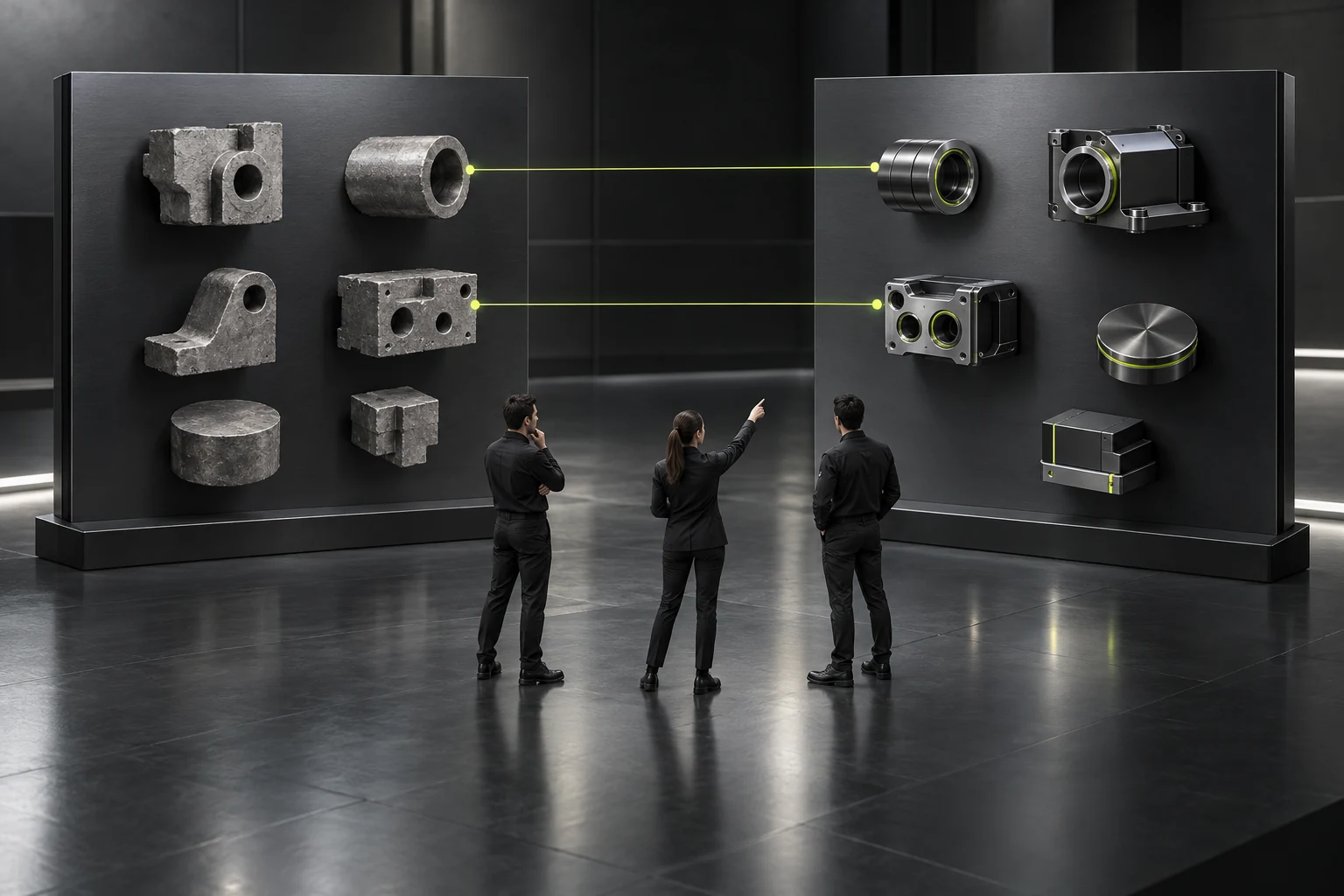
Do not just post a blurry photo of your reception wall. Show what you really have:
- If you are a manufacturer: State the proportion of your staff who are R&D engineers, the number of automated production lines you operate, the extreme operating-condition tests your laboratory can perform, and the number of days in your regular inventory turnover cycle.
- If you are a software company or professional services firm: Clearly state the core team's years of industry experience, your standardized 5-step delivery and acceptance process, how many countries and regions your clients come from, and the technology stack and quality-control standards you use.
Concern Three: “If this company goes out of business next year or botches the job, who has my back?” (Work backward to: operational stability and evidence from benchmark clients)

Procurement staff are most afraid of being blamed for choosing the wrong supplier. In the middle and later parts of your brand story, use hard facts to reassure them:
- The actual length of time the company has been established and data on sustained service: For example, “Operating steadily and continuously since 2014/2019, with a repeat-purchase and referral rate among existing customers exceeding X%”;
- Choices made by prominent clients in the same industry: List the representative industries you have served and logos of well-known corporate clients, and include 2–3 specific testimonials from clients' technical directors or brand leads. Explain what problem you helped them solve, instead of simply saying “It was a pleasure working together.”
Concern Four: “How do I reach someone who can actually discuss things and make decisions?” (Work backward to: a transparent physical address and contact channels)
At the bottom of the page, openly list your exact office address down to the street number, landline and mobile numbers, and the principal's WeChat contact and work email. Only when customers find that your background, technical resources, track record, and physical location all fit together and stand up to scrutiny has your brand story truly fulfilled its commercial purpose.