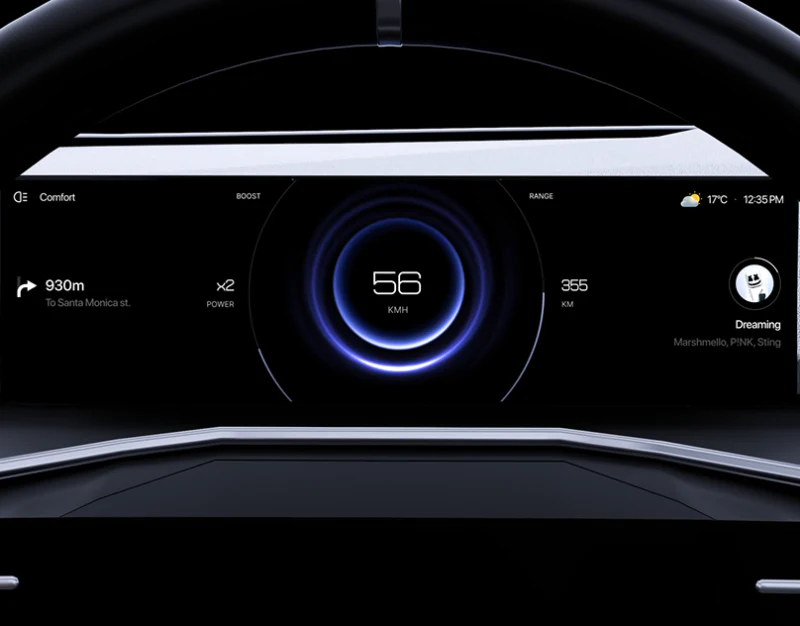
Comfort, Sport, and Eco switch blue, red, and cyan rings while central speed, left navigation, and right range stay fixed. Modes have personality and readings retain focus; color changes do not require finding every field again.
Key takeaways
- Three modes share core positions, retaining a reading structure across lighting colors.
- Mode names and states have different roles, while road-name contrast should support checking.
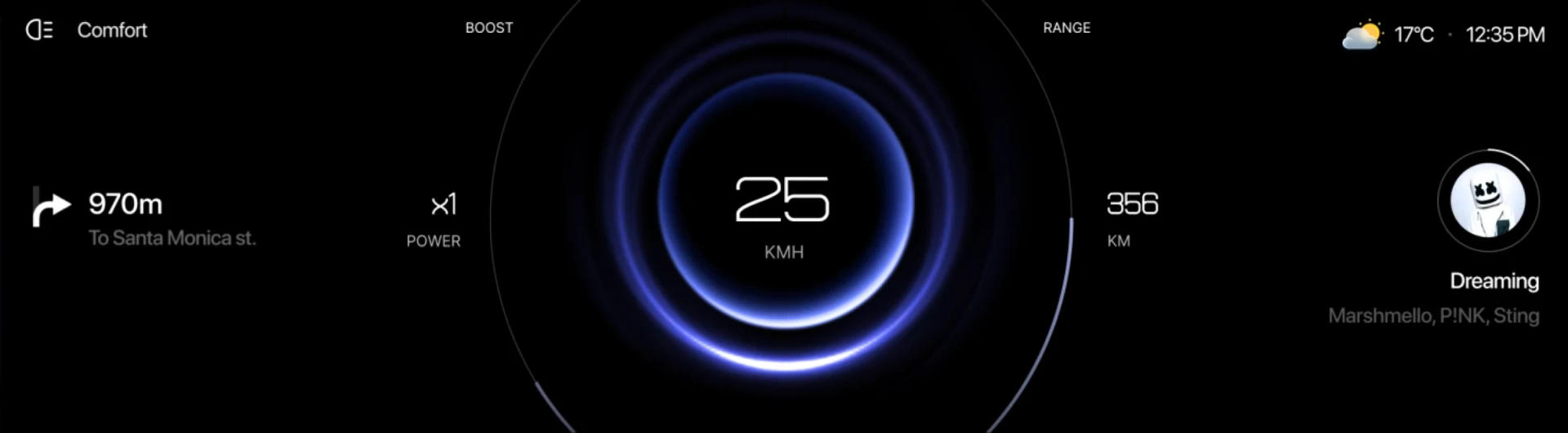
Comfort establishes a stable reading structure
A blue ring surrounds central speed with its unit nearby. Turn arrow and distance group left; RANGE and KM occupy the right. Weather and media recede to upper right and far right, with clear division.
Each main field has a position. Even with an eye-catching ring, navigation and range keep reading areas, and auxiliary information stays out of the center.
JVDS would first inspect names, units, and contrast in static images before motion. Readings are different examples, not one actual drive, and do not prove recognition while driving.
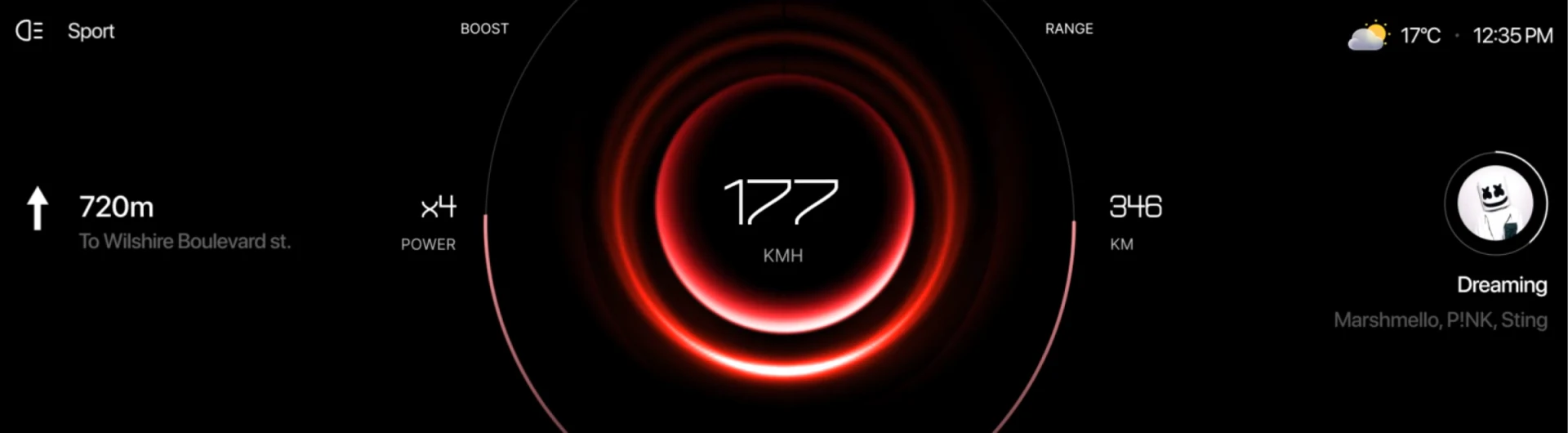
Sport gives red an explicit identity
Sport appears at upper left with a red ring, while speed, navigation, and range retain their areas. Name and color identify the mode without red alone.
Mode character can change local light and form while structure persists. Other important red notices need separate positions, icons, and words to avoid being absorbed into the atmosphere.
JVDS values separating mode from status. Color need not carry every meaning; units and objects stay identifiable. Switching is absent, so light intensity and driving use require separate reviews.
Eco keeps the divisions, with clearer road names possible
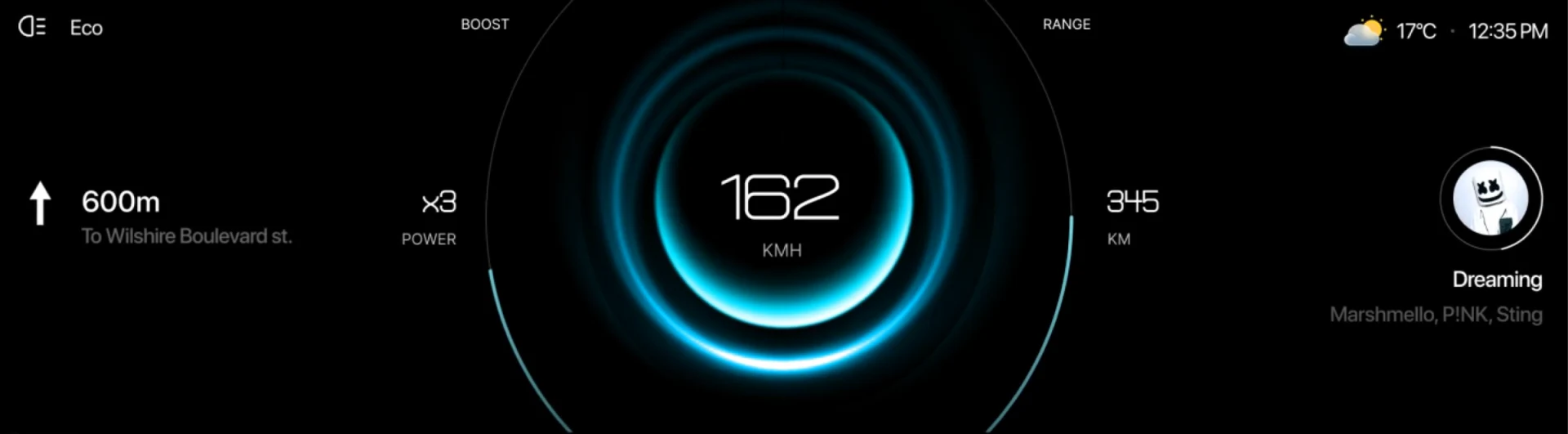
Eco uses cyan with navigation, speed, and RANGE in similar positions. Road names are small and dark beneath distance. Distance stands out, but roads identify destinations and deserve contrast review.
Increasing road-name contrast is more direct than decoration. Distance, direction, and road jointly explain navigation, with strategies for long names. Media can truncate, but core navigation follows checking needs rather than one shared compression rule.
JVDS would find speed, navigation, and range in every mode, then test long names and backgrounds. Stable positions and accurate wording give distinctive modes a practical basis; actual vehicle usability still needs verification.
Navigation can maintain levels for next action, distance, and road. Preserve identifying content in long roads, simplifying auxiliary words if needed rather than continually shrinking type. Colors can change with modes while instructions retain positions and units.
Frequently asked questions
Should driving modes change every layout element?
Atmosphere and local forms can vary while core fields keep continuous positions. Actual use still requires relevant review and verification.
Design review checklist
- Find the same speed, navigation, and range fields in each mode.
- Check treatment of the longest road and media names.
Combine mode visuals with stable information
If your automotive or device interface has multiple modes and states, bring core fields and variation rules to discuss.
JVDS Design Studio provides UI/UX design, website design, and development services to help organize page content, interface structure, and implementation needs.