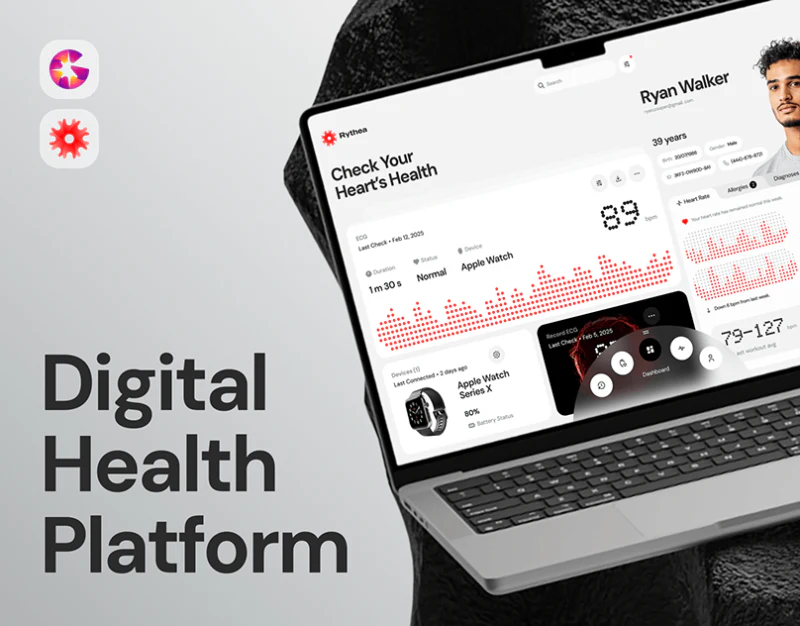
In UI design for digital health products such as heart rate monitoring, ambulatory ECG, and blood pressure and blood glucose logging, the greatest ethical and usability challenge is how to present physiological readings to ordinary patients or older users without medical training, preserving the rigor of medical data without causing needless alarm over isolated numerical fluctuations.
1. Physiological Readings Are Meaningless Without the Context in Which They Occur
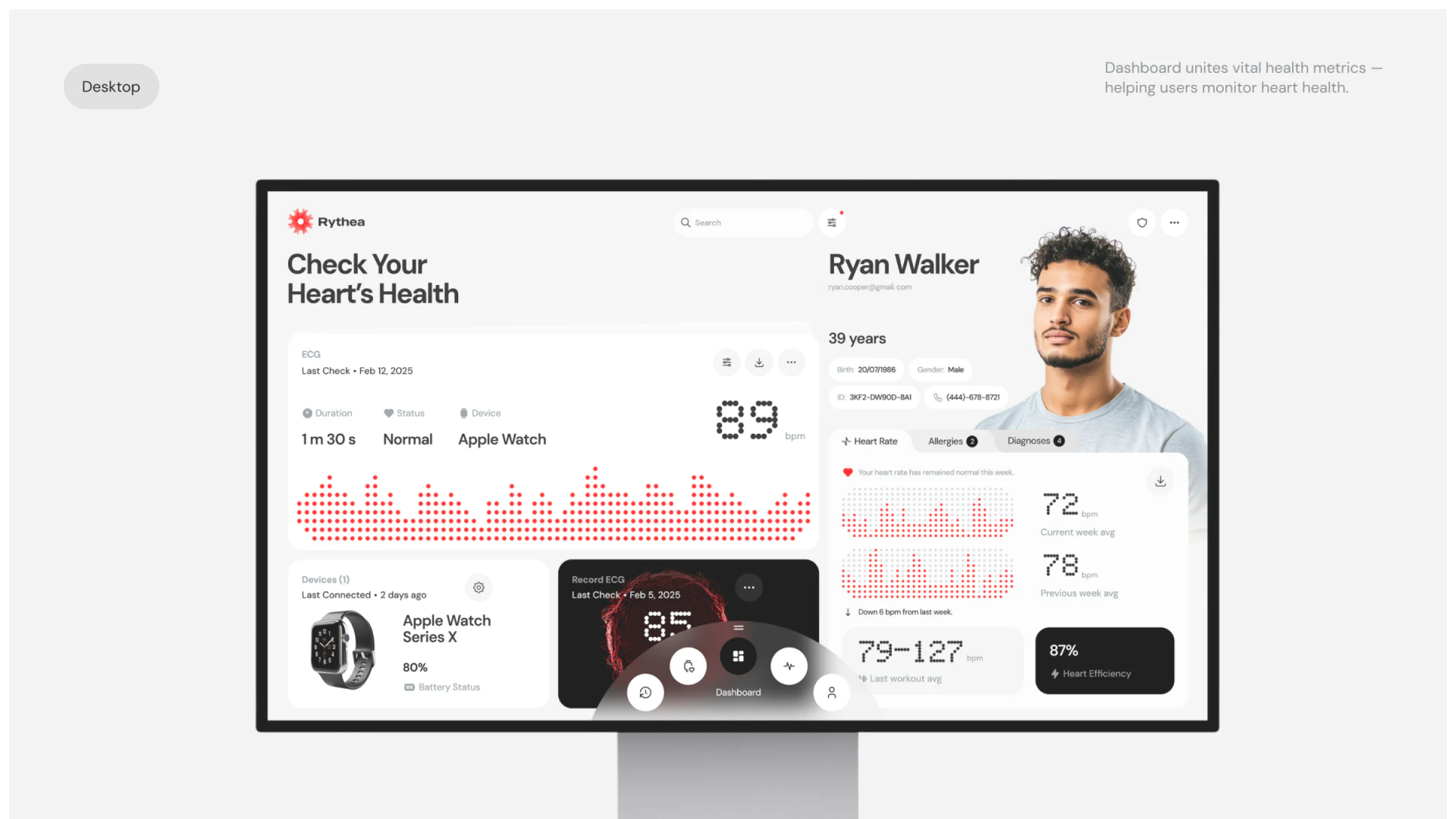
The same heart rate reading of 118 bpm is a completely normal physiological response if it occurs just after a user climbs five flights of stairs or drinks strong coffee; during deep sleep at night or while sitting at a desk, it may indicate an abnormal heart rhythm. Professional cardiac monitoring interfaces such as Rythea stand out for consistently pairing each value with the context of the person's physical state at that moment:
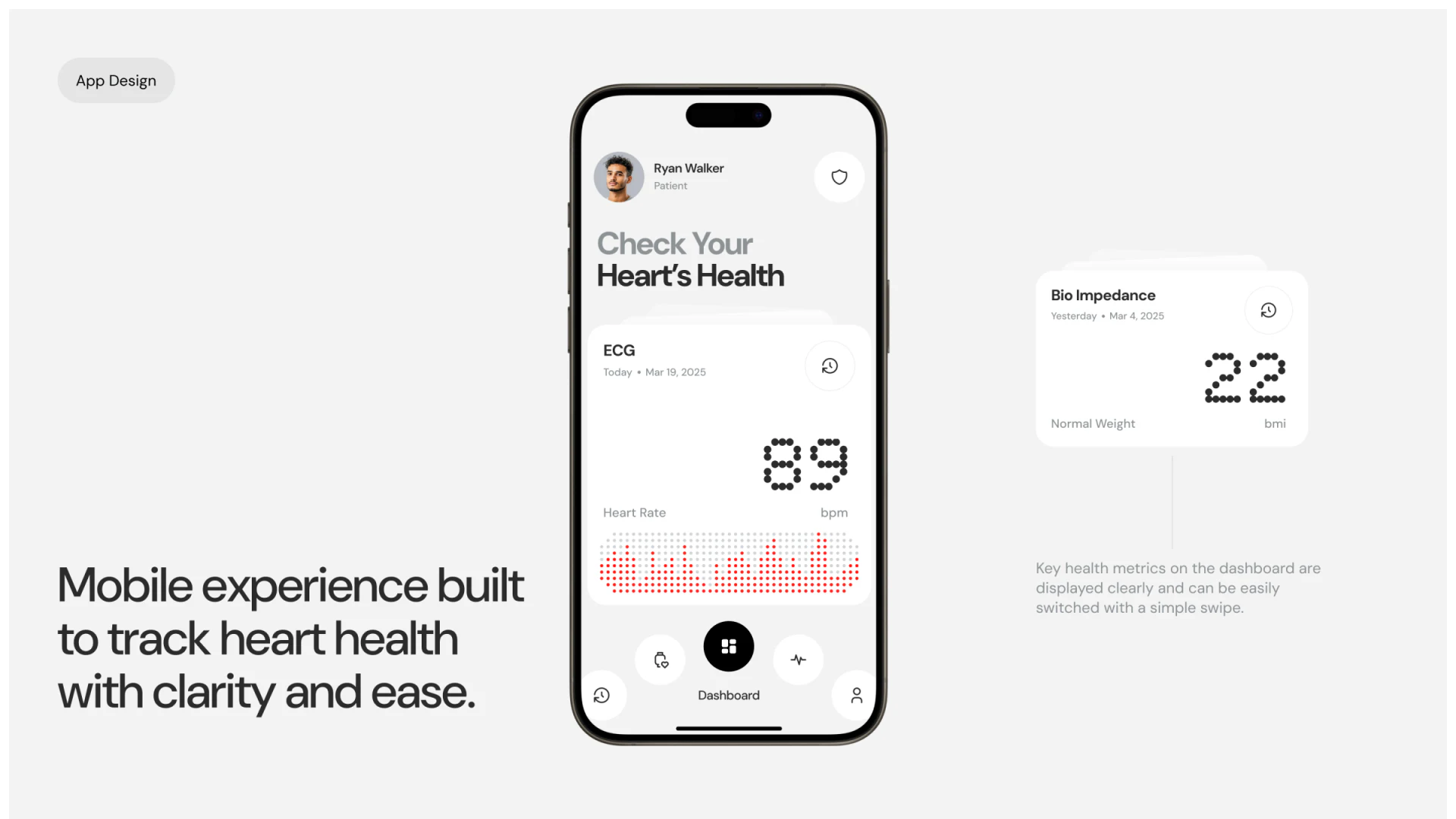
- Automatically overlay activity markers on the timeline: Beneath the 24-hour heart rate line chart, automatically synchronize icons for walking, running, sleeping, and resting recorded by the phone's motion sensors. Let users add supplementary tags with a single tap, such as “Just Finished Exercising,” “Had Coffee / Alcohol,” or “Feeling Chest Tightness.”
- Frame raw numbers with a descriptive status pill and a normal reference band: Never enlarge a glaring red number on its own. Instead, use a combined layout such as
[72 bpm] + [Resting Heart Rate · Within Your Normal Range of 60-80 bpm]to reassure users first.
2. Severity-Based Wording for Alerts and Exportable Reports for Patients and Clinicians
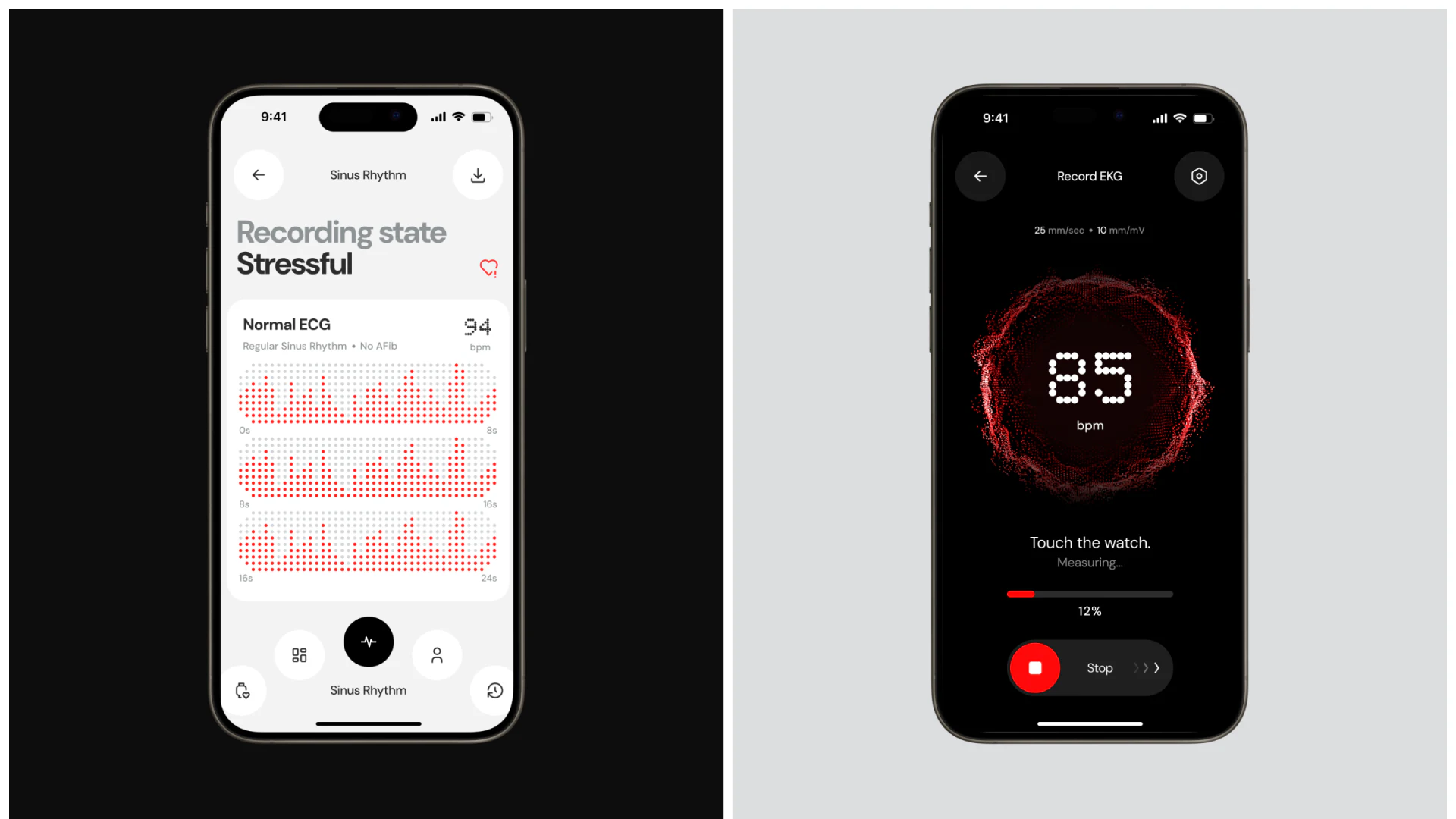
When a risk of atrial fibrillation or a sustained high heart rate is detected, avoid alarming full-screen red alerts. Instead, use noticeable but calm amber or medical-blue notification cards, guiding the user through “What Was Observed → Recommended Position for a Repeat Measurement → One-Click Export of a Standard PDF ECG Waveform for a Doctor's Reference.” This conveys the professionalism and care expected of a medical-grade product.