Issue Ink organizes its store with a light paper-colored background, large serif headings and magazine covers. The catalog resembles a display wall of publications, while blue outlines and emphasis areas bring the controls forward. Visual appeal needs information continuity here: the publication name, issue, cover and price seen throughout the journey should all identify the same product.
Key takeaways
- Publication names, issue numbers and editions provide stable identifiers alongside the cover.
- The catalog, product details and cart need consistent product information and prices.
- The cart and checkout should explain which fees are included and let readers return to check the product.
The catalog establishes the identity of each issue
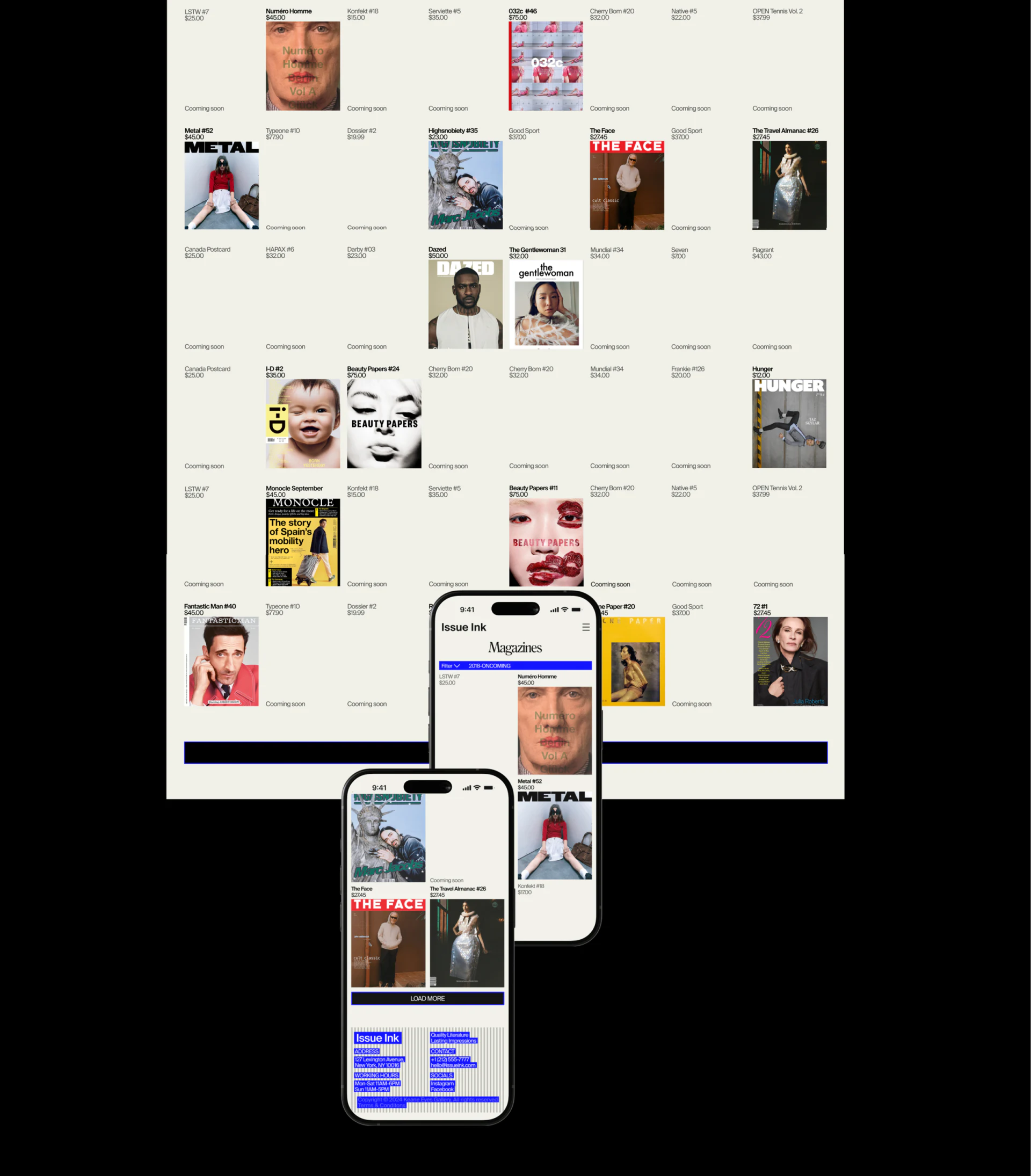
The desktop catalog arranges magazines in a multi-column grid, with names, issue numbers and prices above the covers. The mobile view narrows to two columns but retains those fields, with a load-more button below. Covers and text support visual browsing while giving readers who know a title or issue number a way to find it.
Some empty grid positions say Coming soon and keep the rhythm of the available products. If too many appear in succession, however, the publications currently for sale become more scattered. A clearer upcoming-release state or a corresponding filter could help the catalog serve both previews and immediate shopping.
032c #46 shows $75.00 in the catalog and $25.00 in the detail view, with a different cover presentation as well. If these are different editions, the edition names need to appear. If they are the same product, the price and cover need to be checked against the same source; an identical issue number should not leave readers to resolve the difference themselves.
Covers and inside pages show the content; descriptions identify the product
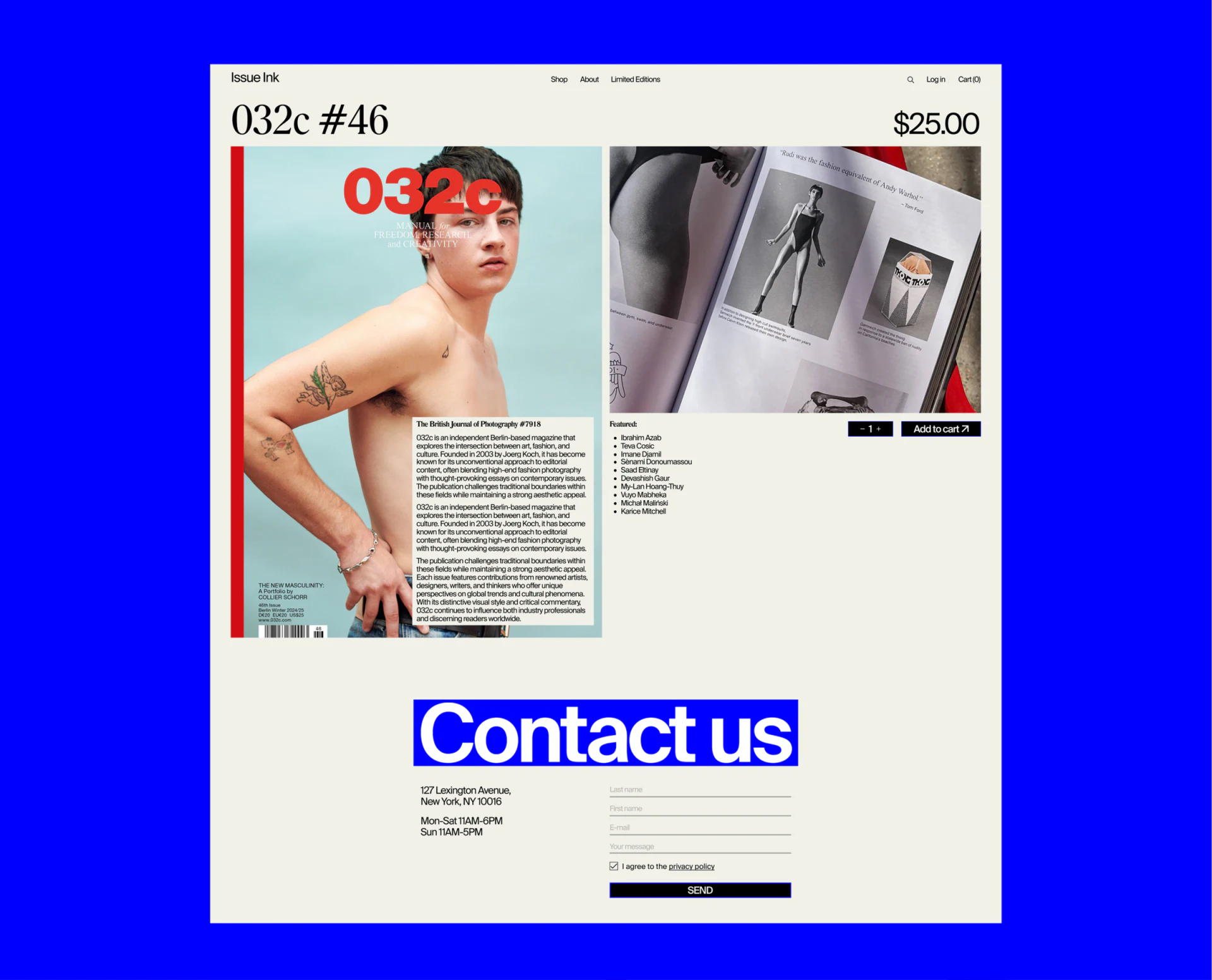
The detail page places the 032c #46 title and price above a large cover and an open inside spread. A Featured list, quantity control and black add-to-cart button sit to the right. Content previews and purchase controls are visible together, and the spread explains more of the publication than a cover alone can.
The description card, however, uses The British Journal of Photography #7918 as its subheading while the paragraph discusses 032c. Two publication identities within one block can make readers hesitate over which issue they are viewing. The heading, copy and images need to match, and repeated passages can be cleaned up during the same content review.
JVDS Design Studio would favor shared product information for the catalog, details and order summary, managing the name, issue, edition and price as one set. Covers can then retain their personality while product identity has a stable basis.
The cart retains identifiers before explaining the fees
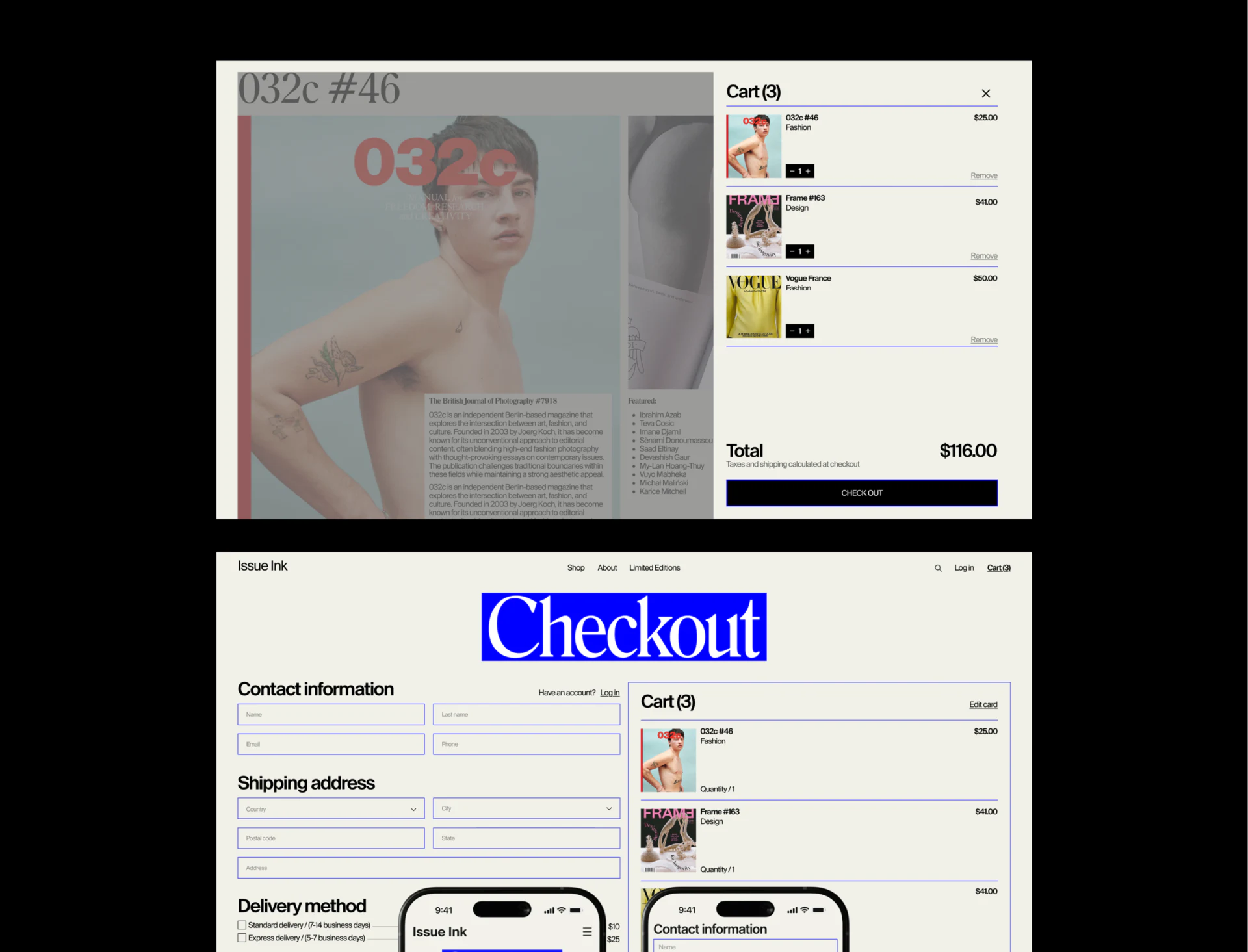
The side cart keeps each magazine’s cover, name, category, quantity and remove action. The dimmed product page remains behind it, so readers can review their choices and recognize that they are still on the detail page. Three prices—$25.00, $41.00 and $50.00—add up to the displayed $116.00. A note says tax and shipping are calculated at checkout, making the fee scope visible before the next page.
Checkout places contact details, addresses and delivery options on the left, with a product summary and Edit cart on the right. Covers and issue numbers continue to support a final check. The summary’s last line shows $41.00, though the corresponding line in the cart above shows $50.00; the two sets of information need to be checked for consistency before the pages are handed over.
Delivery options also state times and costs. The final confirmation should distinguish product subtotal, shipping, tax and amount payable. Entries missing an issue number need that identifier added, particularly when one publication has several editions; the cover alone is not enough.
Carry publication information through the purchase journey
For magazines, books and other products with multiple issues, first align product identity and fee definitions, then organize the catalog, content previews and checkout. Clear edition differences give each confirmation step information readers can compare.
JVDS Design Studio offers UI/UX design, website design and development. We can help organize ecommerce experiences around publication catalogs, product details, shopping carts and checkout.