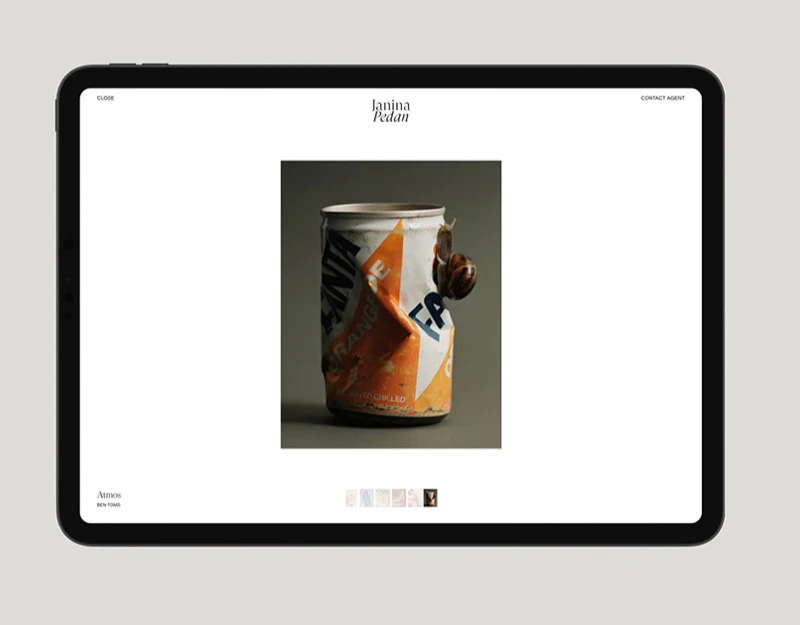
The Magnet Agency places work at the center and interface at the edges, using white, small functional words and italic serif names for a gallery character. Photography, sound and profiles need different information; consistent appearance cannot replace credits and roles. Space supports focused viewing while still explaining who did what and how to continue.
Key takeaways
- Large images and edge information make a quiet stage, with thumbnails showing browsing positions below.
- Names, projects and roles need explicit connections rather than position alone.
- Sound and unavailable portfolios can share visuals while providing recognizable content of their own.
The photo gallery leaves functions at the edges
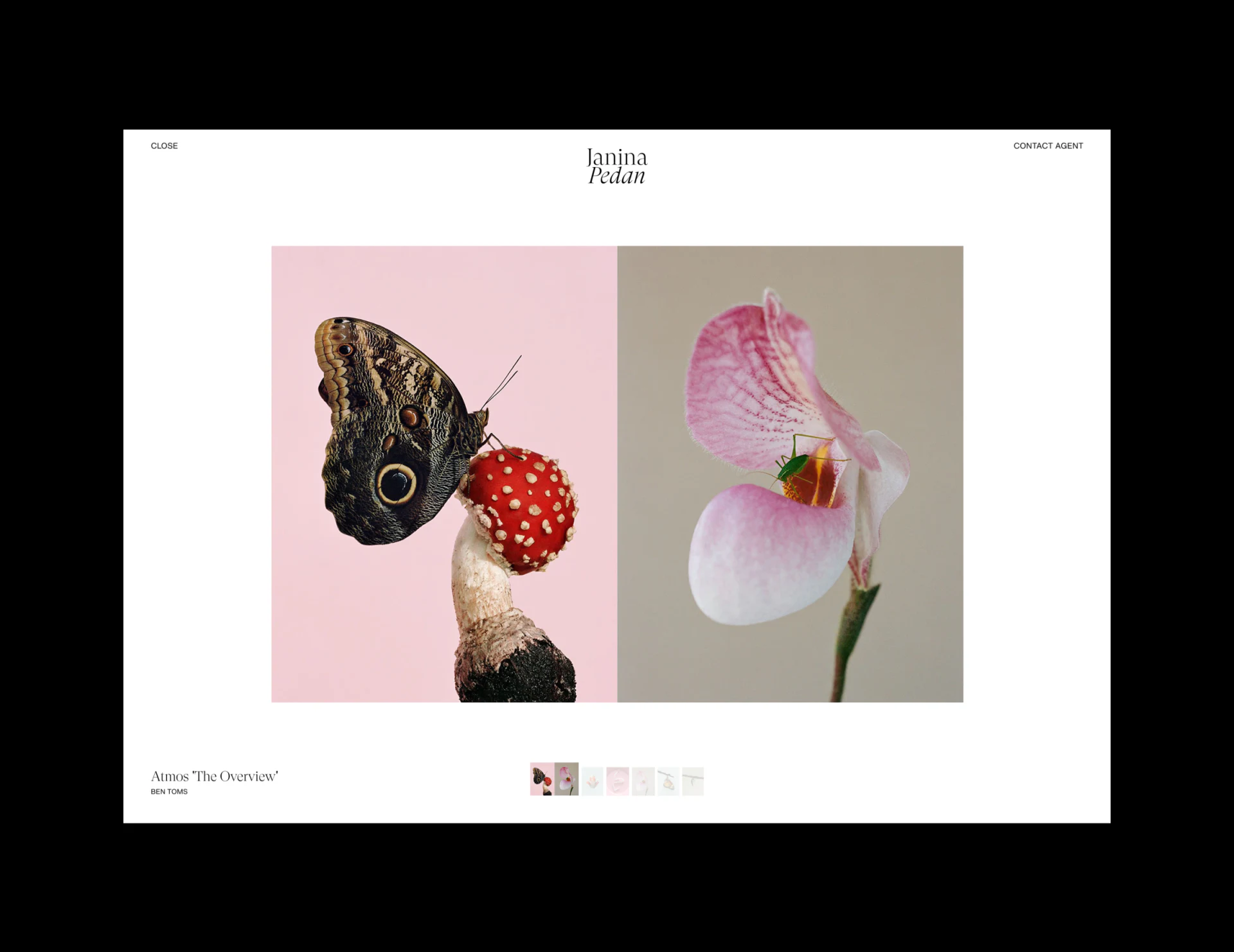
Close sits upper left, Contact Agent upper right and Janina Pedan centrally. Two photographs occupy broad white space: a butterfly and red mushroom, then pink flowers and a small insect. Color and texture stay in the works, without competing edge text or containers.
Atmos The Overview and Ben Toms appear lower left, with thumbnails centered below. The first two are stronger than later ones. Identification and series browsing follow viewing in a clear sequence; thumbnails need stable current-item feedback and synchronized project text after changes.
No visible role label connects the upper name with the other below. They may have different creative roles, needing explicit wording rather than automatically crediting the top name as photographer. JVDS favors compact title, participant and role information, retaining gallery space while accurately explaining collaboration scope.
Sound needs to be heard and identified
Close and Contact Agent remain, with a two-line serif Sound Designer at center. A circle of vertical lines takes most viewing space, followed by progress, 0:20 and 1:30 and a play triangle. Sound becomes a visual symbol in the same central stage as photography.
Track 01 and Director supply limited identity below, with one track tile darker. Comparing work could benefit from title, creator and role beyond numbers and tiles, with duration and playback state synchronized after switching. The central graphic suggests atmosphere; actual playback controls need clear names and states.
The upper heading stays generic and the lower role is not tied to a person. Complete credits explain what people hear and allow contacting an agent about that object. Play, pause, loading and switching can stay concise without reducing a spacious page to an unexplained graphic.
Profiles support portfolios not yet public
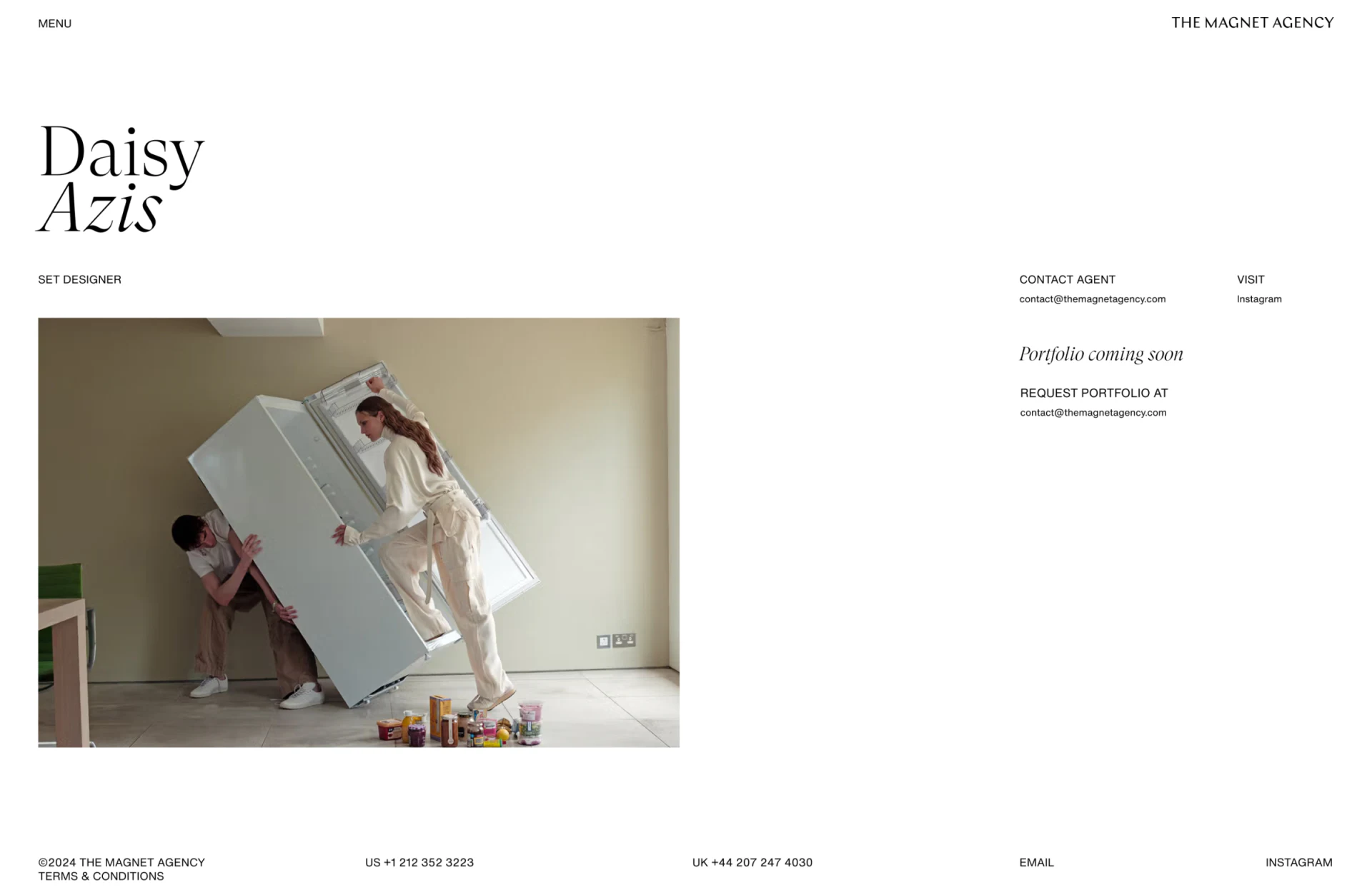
Daisy Azis and Set Designer appear above an image, with Contact Agent, visit entry, Portfolio coming soon and Request portfolio at right. Artist and role are explicit, with a path to request work not yet fully available.
A scene fills about half the width left, while light text sits amid large right-hand white space. Attention moves from person and scene to contact. Agent contact and portfolio requests can state distinct purposes; if they share a channel, prefills or headings should retain the artist being asked about.
Agency name, regional phones and other contacts form a restrained bottom row. Long names, other roles and richer information need wrapping and spacing checks in the same layout. Stability should come from correspondence between work, roles and contact rather than empty area alone.
Frequently asked questions
Will credits disrupt a minimal work page?
Compact information need not disrupt space. Stable edge positions for title, roles and participants keep work central while identifying attribution for professional visitors.
Design review checklist
- Align artist, project and creative role, updating them when work changes.
- Retain sound title, duration and explicit playback status.
- Keep the artist and work object in contacts and portfolio requests.
Connect viewing to professional inquiries
If your artist or agency website presents photography, sound and creative roles, JVDS can help with UI/UX and website design and development, organizing credits, media controls and contact paths.
Start with artist lists and work credits to discuss galleries, profiles and portfolio requests together.