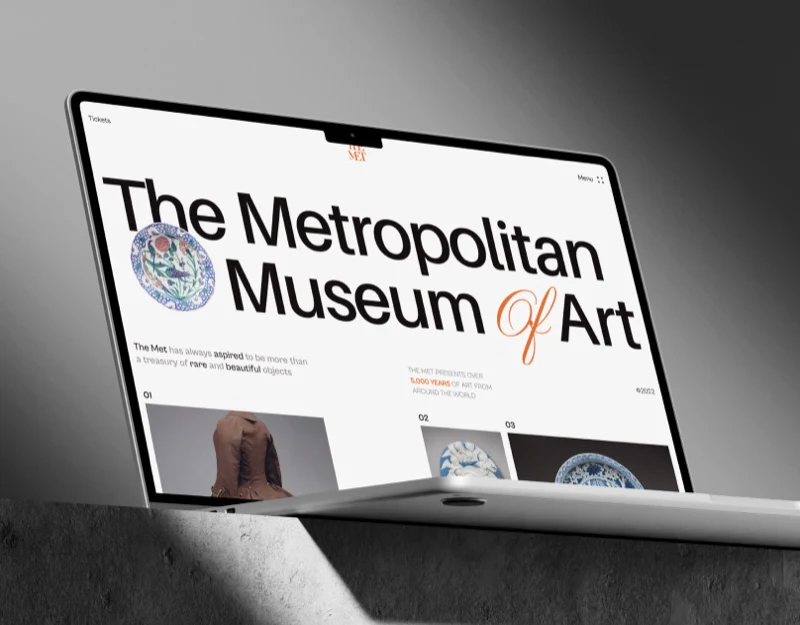
This museum website concept places exhibitions, art categories, and locations on broad white backgrounds. The images stand out, while dates and places are not confined to posters. It offers a way to examine two reading purposes: appreciating content online and preparing a visit. Both use the same art material, but need differently named entry points.
Key takeaways
- Dates and venues remain separate from posters, giving art reading and visit conditions their own positions.
- Art category cards need accurate headings, and venue details should remain matched to their images.
Dates and venues can be checked beside the poster
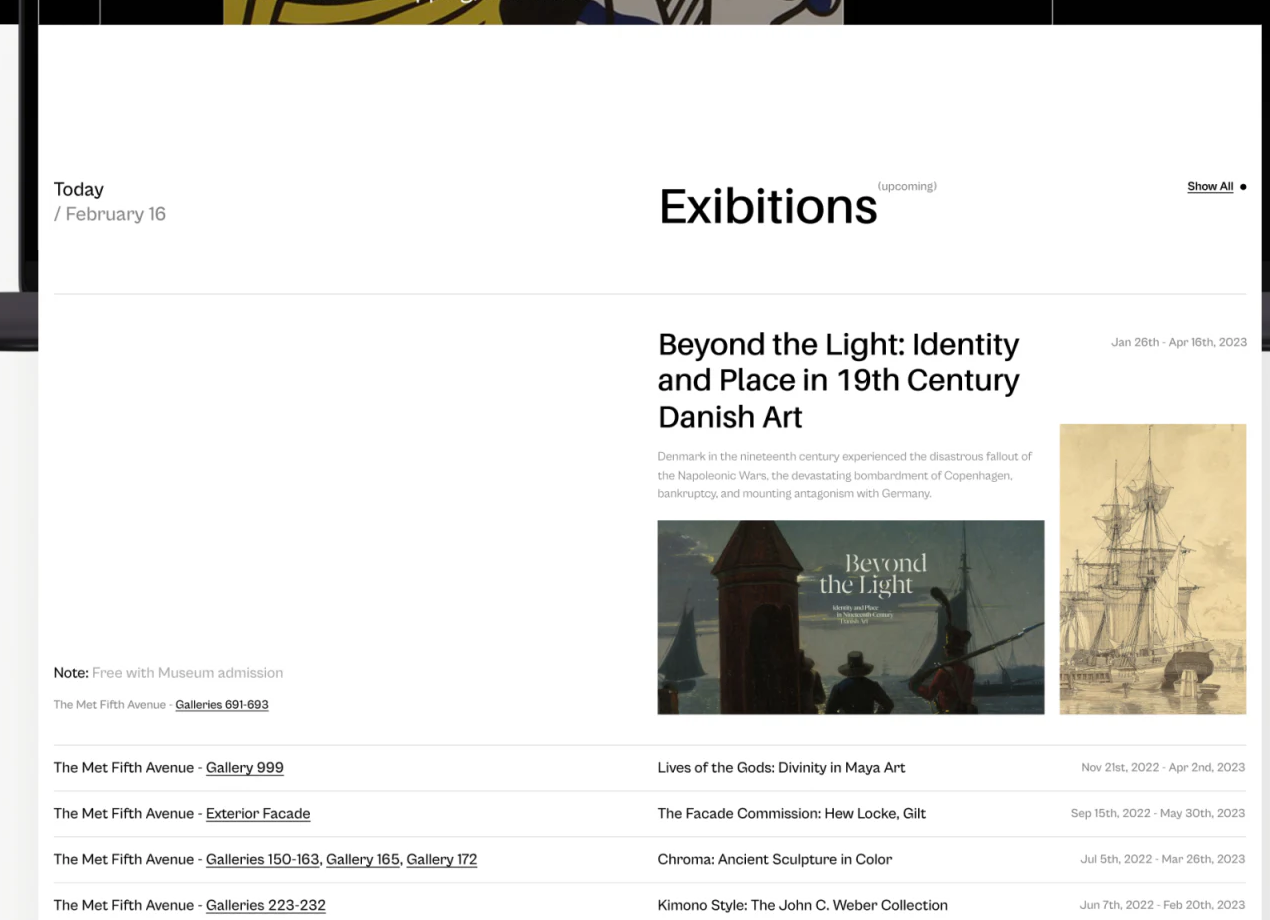
In the Exhibitions area, the exhibition name and artwork sit on the right, with dates near the title. Admission and venue information occupy the left. The list below continues with separate columns for location, exhibition name, and dates. There is plenty of white space, but each field has its own column.
This exhibition website layout allows essential information to be updated independently. Even when a photograph is reduced or a poster is replaced, dates and places remain readable in stable positions. Visitors do not have to enlarge an image to find the conditions of a visit.
JVDS likes the coexistence of artistic expression and planning fields, although the historical dates in these images cannot serve as current visit information. A live page needs status and maintenance information that clearly distinguishes upcoming, ongoing, and finished exhibitions.
Bold category cards sit under a heading about floors
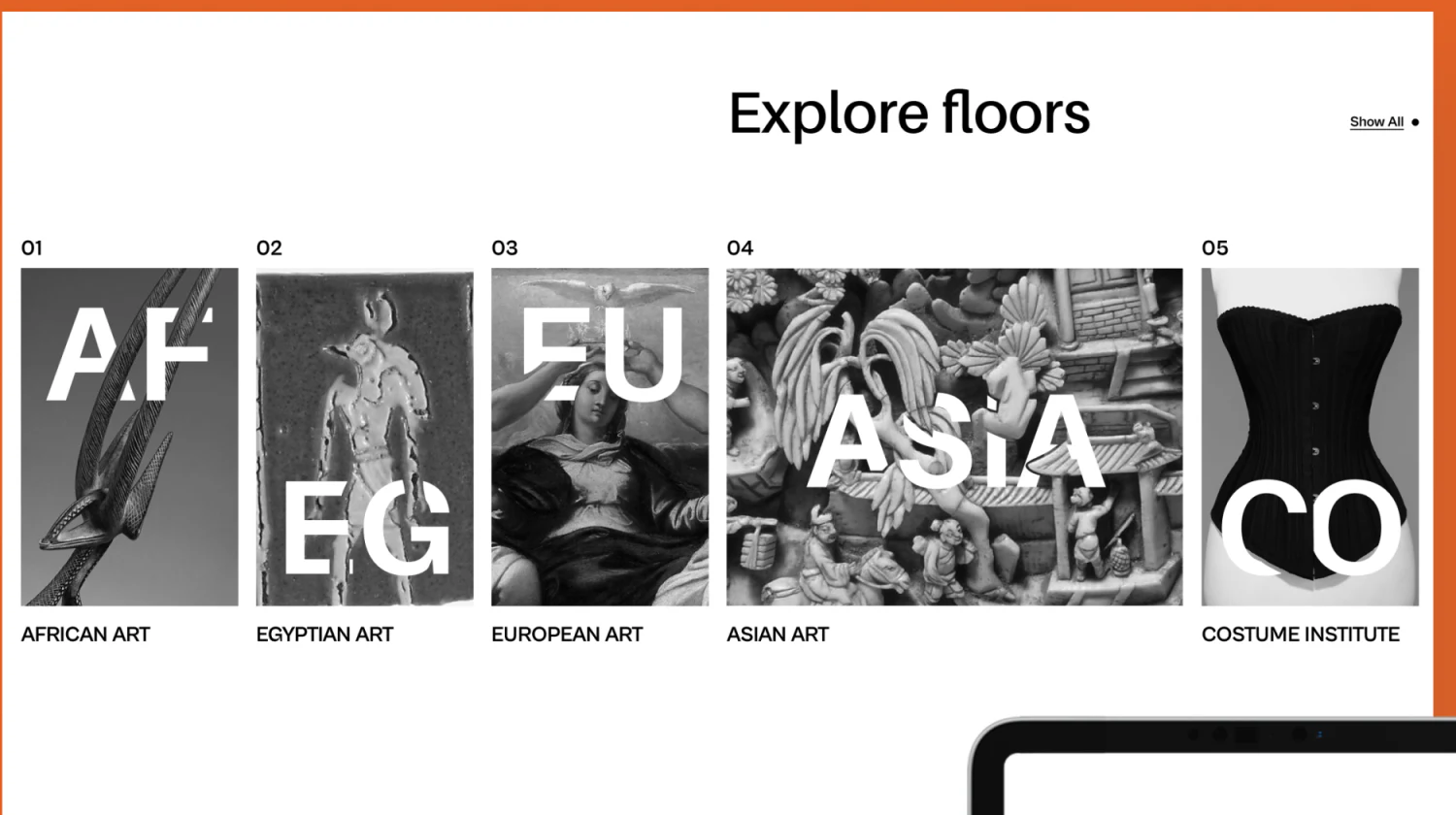
Below Explore floors, five images carry the large abbreviations AF, EG, EU, ASIA, and CO, with full names such as African Art and Egyptian Art beneath them. The large lettering becomes part of the composition, while numbering and the names below give each card a stable position.
The visible cards represent art categories, but the heading refers to floors. This can create a different expectation for someone looking for a physical space. Further development should use an accurate heading; if the intention is to introduce floors, it needs a separate mapping between floor numbers and categories.
JVDS would retain the visual force of the large abbreviations while letting the full names support recognition. Images and text can together form an entry point, but the action should explain which material comes next, so visitors do not have to click experimentally to discover its scope.
Each museum location has its own information block
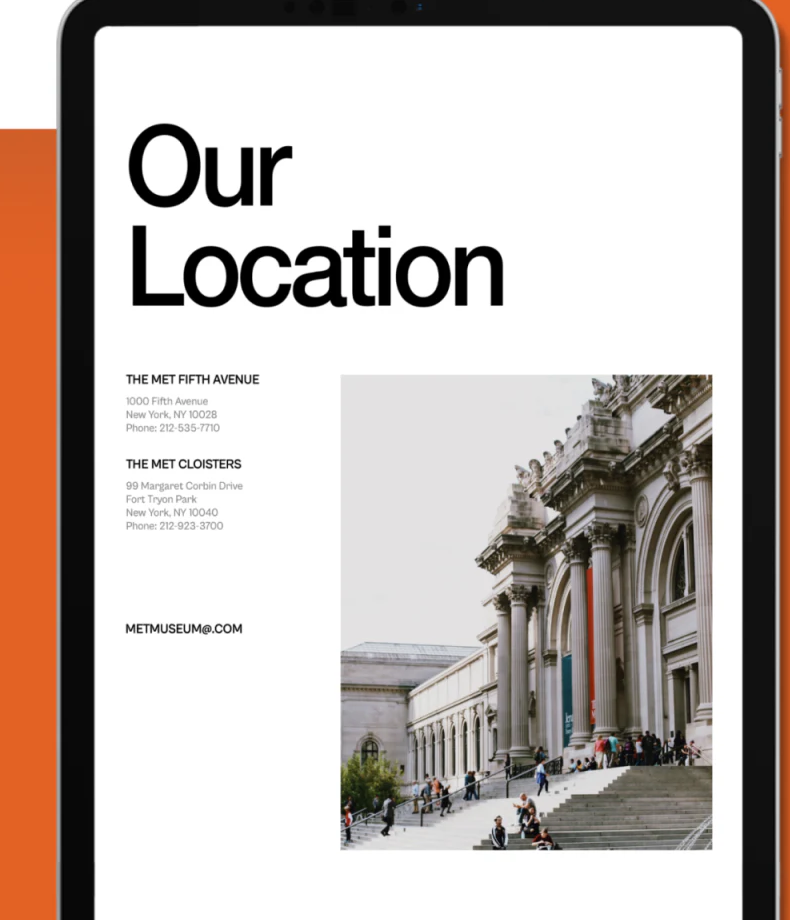
The mobile Our Location page opens with a very large heading. Below, The Met Fifth Avenue and The Met Cloisters each have a name and address, with a building photograph on the right to aid recognition. A large image coexists with two sets of details; attractive photography has not displaced the text.
A location page can connect each venue choice to its own details and images, with opening information assigned to the same place. Browsing a type of art online and visiting a museum location are different actions. They can be linked without sharing an entire route.
JVDS would check what Show All expands in the exhibition and category areas, and whether returning preserves the previous item. Cultural websites also support specific searches. The more compelling the artistic atmosphere, the more clearly headings and scope should be stated.
Frequently asked questions
Can art categories be called floors?
Only when their physical locations are explicitly mapped. Categories and floors answer different questions, so the heading should match the content behind the entry point.
Design review checklist
- Check that the category heading matches the scope of the cards.
- Treat exhibition dates, venues, and status as separate maintainable fields.
Make cultural content and visit routes clear
If your cultural, exhibition, or venue website needs to organize artwork categories, events, and locations, bring the content and visit fields to the discussion.
JVDS Design Studio provides UI/UX design, website design, and development services, and can help organize page content, interface structure, and implementation requirements.